
When talking about cerebrovascular accidents (CVA), one significant factor immediately strikes the mind of individuals whether related to healthcare or among the population with various professions, that is, rehabilitation. You may wonder why? The answer lies in the fact that over decades of research & findings have shown that rehabilitation is the main key recovery tool proven for stroke patients.
Table of Contents
ToggleNumerous guidelines suggest early rehabilitation. According to brain science, expeditious physical therapy will speed up recuperation if done properly in stroke patients. This encircles the notability of 8 essential facts to know about stroke rehab. Not only that, it indicates the importance of early rehabilitation for better outcome recovery.
Why is Rehab important for Stroke patients?
Stroke rehabilitation is pivotal because it encourages the brain in addressing numerous deficits that occur after a CVA, including the subsided neuroplastic capabilities, loss of interconnection between brain regions, and motor dysfunction. Many researches have shown the enhancements in the structural and functional connectivity of the brain’s motor regions are directly correlated to motor recovery.
When a stroke disrupts a portion of the motor framework (such as the motor cortex or corticospinal tract), it in return affects the brain’s networking structure leading to paralysis, poor coordination & balance, speech deficit & weakness. During rehabilitation, both structural & functional changes may transpire, causing the damaged pathways to recover partially or completely & help in rerouting the signals. Improved motor function in patients is frequently accompanied by increased link up between the motor cortex and other motor function related areas.
Simply put, the brain’s ability to “rewire” itself is the reason rehabilitation following a stroke is effective. A person’s ability to heal from a movement injury will improve with the strength and connectivity of the brain’s motor areas, both physically and functionally. This lays the foundation brick to 8 essential facts to know about stroke rehab. Ultimately, rehabilitation reduces disability and restores the ability to participate in important aspects of life by transforming inadequacies into manageable or rectified impairments.
What do we need to know about Stroke Rehab?
Now that the importance of rehabilitation for survivors of stroke is well established, the next stage is to comprehend its fundamental elements, including how it allows a paralytic patient to initially stand with crutches and then advance to walking on their own and this comes with the 8 essential facts to know about stroke rehab.
From the simplest bed movements to more complicated functional skills, stroke therapy is a thorough process that attends to all phases of recovery. Restoring postural control and bed mobility is the first step, followed by controlling upper limb deficits and addressing spasticity, which frequently follows a starting point of flaccidity.
In order to restore independence, therapy also focuses on reconditioning the lower limbs, practicing safe transfers, and rebuilding speech and communication. Patients are gradually helped to use their immobilized limbs again, aiming for coordinated motions and, eventually, the capacity to carry out important everyday tasks. Therefore, you need the 8 essential facts to know about stroke rehab to understand how this rehabilitation framework comes into action.
8 Essential facts to know about Stroke Rehab
Before we dive into the 8 essential facts to know about stroke rehab, let’s review a case study for better learning purposes:
A 56 year old female presented to emergency with a history of fall one hour prior to arrival at ER. Following her fall, she developed a sudden onset of weakness on her right side of the body along with inability to respond verbally. There was no preceding history of trauma, seizures or loss of consciousness as reported by her attendants. Her labs were ordered & along with that non contrast CT brain & MRI on urgent basis. Overall findings revealed Acute Left Middle cerebral artery stroke & after ER management she was referred to Neurology ward for further treatment plan.
Upon arriving at the neurology unit, the patient was stabilized and conscious. Despite medical advice, her attendants refused rehabilitation services & due to which her right sided weakness persisted with bed stay leading to the development of pressure ulcers in the sacral region. She was at a high risk of developing deep vein thrombosis.
Additionally, ignoring speech rehabilitation resulted in ongoing communication issues, which restricted her social interaction and exacerbated her psychological suffering. As time went on, her functional deterioration worsened rather than improved, highlighting the need for early and regular rehabilitation following a stroke. This is self explanatory as to why it is necessary to start early rehab for stroke patients.
Following weeks of no improvement, the patient has recently joined our clinic to start her rehabilitation program. As part of her supervised rehabilitation, she has begun attending scheduled therapy sessions that aim to help her regain functional use of her damaged limbs, improve her motor control, and move towards independence in her everyday activities. She is now on the road to recovery with steady work and expert assistance. With that being said, let’s move on to our 8 essential facts to know about stroke rehab.
1. Task-specific training rebuilds function
The task-specific training such as reaching & grasping objects has proved to be useful in post stroke patients. During reaching activity, the hand is supported by the arm & as the patient tries to grasp an object, his hand starts to presuppose the shape needed to acquire to hold the object. Along with reaching & grasping activities, postural shift towards the affected side is helpful in promoting weight bearing and to mitigate the effects of dominant flexion synergy.
The patient is advised to modify his position whilst weight bearing in standing is achieved by putting more weight on the affected side or using the affected arm more to stabilize & support his overall body.
The patient is encouraged to perform exercises like tabletop sliding or cleaning, engaging his elbow extensors, scapular protractors as they are more affected in stroke. Another important aspect that is added during task-specific training is weight shifting exercises to retrain the body & muscles to help support his balance, coordination & controlled movement patterns.
2. Constraint-Induced Movement Therapy nurtures weak limbs
Out of the 8 essential facts to know about stroke rehab, constraint-induced movement therapy is the most propitious. In this type of therapy, the patient is invigorated to utilize his affected upper extremity for all the functional tasks for about 5 to 6 hours excessively as compared to the normal limb. This mechanism helps in regaining motor control by performing strict day to day tasks from the affected limb, creates a self awareness of the paralyzed limb in the patient & reduces the influence of disability.
3. The Brain Is Rewired by Mirror Therapy
Mirror therapy is the form of visual feedback therapy that helps the patient in working with his paralytic limb through the help of a mirror reflection. It works on the proposition of neuroplasticity. When a patient moves the unaffected limb while looking at the reflected image in a mirror, the brain interprets those motions as though the diseased limb were moving as well.
The brain’s motor regions that would normally be quiescent because of paralysis are stimulated by this visual stimulation. These neural connections become stronger with prolonged exposure, which encourages the brain to redirect impulses through different pathways. Patients can so increase coordination, lessen neglect of the afflicted side, and progressively regain voluntary control.
According to a research, The Effectiveness of Mirror Therapy to Upper Extremity Rehabilitation in Acute Stroke Patients, conducted in 2021, mirror therapy showed clear enhancement in the motor functioning of the upper limb when used as an intervention.
Improvement in Motor Function with Mirror Therapy
Pretest vs Posttest - 12 weeks
No Data Found
To assess its impact on stroke patients’ upper limb rehabilitation, the Mirror Therapy intervention was conducted over a 12 week period as shown in the graph above. Patients undergoing Mirror Therapy demonstrated measurable surge in overall muscle strength, ability to regulate spasticity and wrist movement (MAS), improved arm and hand movements (BRS), and upper limb motor functioning (measured by FMA) by the end of the research. According to these results, regular Mirror Therapy for 12 weeks can greatly improve upper limb strength and motor function in stroke patients undergoing rehabilitation.
4. Robot-Assisted Therapy enables sustained repetition
The robotic devices help assist the stroke patients with moderate to severe motor impairments. They are used in concurrence with other modes of therapies such as Task-oriented therapy & Constraint-induced Movement therapy, to restore the motor function. The robot-assisted therapy assists the stroke patient in performing a high number of repetitive & controlled activities, hence training the brain to rewire its mechanisms. Additionally, robots guarantee accuracy and lessen therapist weariness, allowing patients to participate in longer, more regular training sessions.
These technologies are now becoming a crucial component of contemporary stroke rehabilitation as the globe moves closer to AI-driven treatment approaches. Will these methods be a part of 8 essential facts to know about stroke rehab in the future? We never know.
5. Virtual Reality helps in creating Daily life Stimulations
As we are already chattering about AI, let’s unpack the impact of virtual reality & video games in stroke recovery. Many researches have found that the use of VR-augmented therapy helps the patient in gaining more function when used in early rehab phases. In a simulated environment where visual feedback improves motor learning, virtual reality enables patients with paralyzed upper limbs to practice reaching, grasping, or moving objects. VR promotes neuroplasticity by activating mirror nerve cells and motor planning areas of the brain, even when there is physical movement at a small-scale. The Truth about VR in Stroke Recovery is what you need to read.
6. Hydrotherapy minimizes Joint Stress
Hydrotherapy, commonly known as aquatic therapy, supports individuals with strokes during their recovery by utilizing the special physical characteristics of water. You may wonder how? Because water is buoyant, it diminishes the impact of gravity, allowing weak or paralyzed limbs to be moved with less pressure on joints and it requires less effort. In order to accurately direct passive or assisted movements for individuals who are difficult to mobilize on land, water offers partial weight-bearing support.
Patients with weak proprioception may benefit from the hydrostatic pressure of water, which also improves circulation, lowers edema, and provides sensory feedback. Additionally, warm water eases spastic muscles, which facilitates the stretching and movement of paralyzed limbs. Hydrotherapy sessions for stroke patients often start with gentle aided walking or supported standing in deep water from waist to chest. This protects the joints and lowers the chance of falls while gradually increasing mobility, flexibility, balance, and confidence.
7. Sensory Re-Education Reinstates Perception
Many stroke victims lose their sensation to touch, temperature, location, or texture, which renders it challenging to do even basic actions like holding a cup or buttoning a shirt. A focused rehabilitation technique called sensory re-education aims to teach the brain how to perceive and process these sensory inputs once more.
Graded texture recognition, vibration therapy, temperature discrimination, and mirror therapy are some of the methods used to help the brain repair the disrupted neuronal pathways caused by the stroke. In addition to improving fine motor control, this refinement of perception lowers the chance of injuries brought on by impaired sensation.
8. An important component of rehabilitation is Community Reintegration
The final & most significant fact among the 8 essential facts to know about stroke rehab, is community reintegration. Rehabilitation for stroke patients continues into their daily lives and does not stop at a medical center or clinic. Helping stroke survivors resume fulfilling roles in their communities of friends, workplaces, and families is the main goal of community reintegration. Support for social interaction and vocational skills are also part of this approach, as is training for everyday tasks like cooking, shopping, and taking public transportation.
Additionally, it covers emotional and psychological subjects including boosting optimism, lessening loneliness, and controlling anxiety or despair. Community reintegration guarantees that the gains acquired in rehabilitation transfer into genuine independence and an enhanced quality of life by bridging the gap between therapeutic sessions and practical obstacles.
REMEMBER! Stroke is a Medical Emergency
While we conclude this article, let’s not forget that stroke symptoms are to be taken seriously, & the very initial step is recognizing a stroke and acting fast.
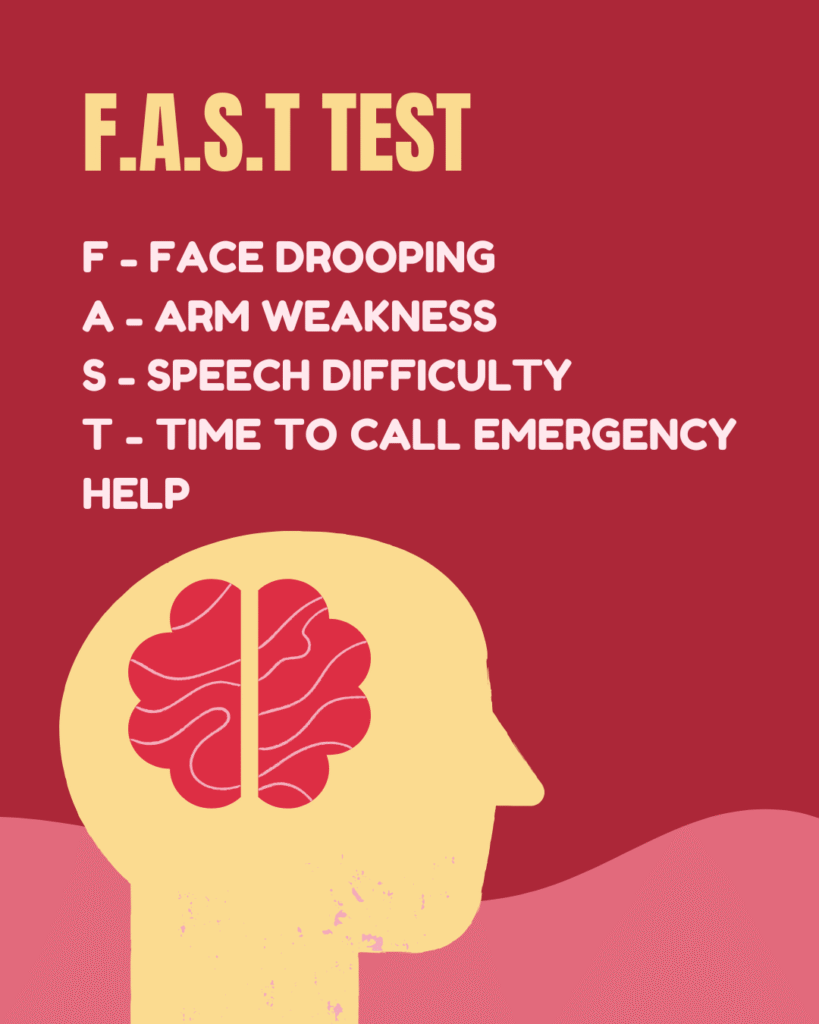
Early intervention increases the effectiveness of 8 essential facts to know about stroke rehab and saves lives.
If you found this helpful, share it with your friends and family. You might help someone recognize a stroke in time to save a life.
This article has been written by a Physical Therapist and provides general guidance on physical health & exercise. While it is grounded in professional expertise, it is not a substitute for individualized medical advice. If you are experiencing pain, specific symptoms, or have an underlying medical condition, please book a 1 on 1, 30 minute consultation with our expert physical therapist for a personalized assessment & tailored recommendations.
Pingback: 5 Intriguing Facts about Neuroplasticity -
Pingback: Proven Effects of Kinesiotaping on Post Stroke Dysphagia -
Pingback: The Hidden Link between Gut Health & Muscle Pain -
Pingback: Is Walking a Part of Exercise Regimen? -