
The quiet, misdiagnosed disorder known as obsessive compulsive disorder (OCD) is not in the slightest limited to clinical textbooks or muttered discussions. It is quickly becoming a dangerous mental health issue that is changing people’s everyday lives all around the world. OCD has started to permeate contemporary lives at a startling rate, from pervasive thoughts that won’t go away to obsessive activities that steal time, energy, and emotional health.
Table of Contents
ToggleOCD is spreading across individuals of all ages and genders in a society where anxiety, ambiguity, and overstimulation are ubiquitous. In this blog we will look into the menacing impact of OCD & physiotherapy care that can help minimize its effects. Once written off as “overthinking” or “perfectionism,” it is now acknowledged as a serious disease that can interfere with relationships, professions, sleep, and sense of self.
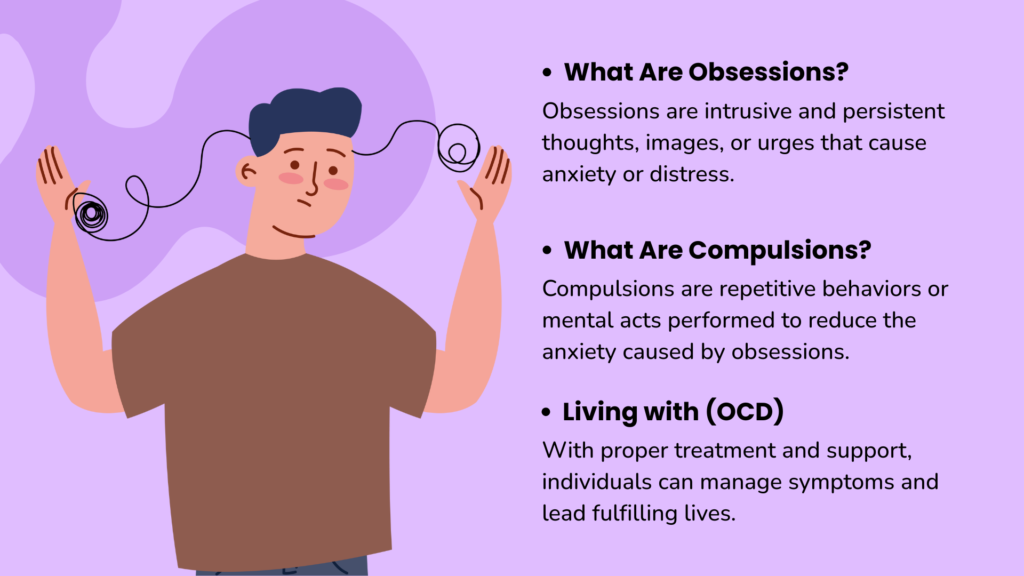
OCD & Human body
Over time, OCD gradually leaves its mark on the body’s biochemical systems, affecting much more than just thoughts and behaviors. The body is kept in a protracted state of alertness by ongoing mental discomfort, where reactions to stress circuits are frequently triggered without sufficient recovery. Sleeping cycles, the regulation of hormones, immunological responses, and general robustness are all impacted by this persistent activation, which upsets regular biological rhythms. Over time, OCD sufferers frequently report persistent weariness, tightness in the muscles, headaches, digestive difficulties, and inexplicable body ache, indicating that this illness is no longer limited to the thoughts alone.
On a more fundamental level, continuous psychological strain linked with OCD modifies ways the mind interacts with the other parts of the human being. Hormones associated with stress like cortisol continue to be high, which has an impact on immunological function, metabolism, and cardiovascular health. This imbalance may eventually lead to decreased pain thresholds, elevated proinflammatory activity levels, and compromised healing ability. Particularly in those whose rituals entail repeated motions or extended periods of stillness, recurrent habitual actions can put additional strain on the musculoskeletal system, resulting in joint stress, postural irregularities, and overuse injuries.
The body starts to reflect the rigidity and fatigue of the mind as various biochemical and physical impacts mount. Chronic anxiousness, patterns of avoidance, and decreased physical exercise can reduce overall functional capacity, impair mobility, and weaken muscle strength. As a result, there is a vicious cycle where emotional manifestations are reinforced by physical discomfort and mental distress drives dysfunctional bodily function. It is crucial to comprehend this interrelated trend because it emphasizes why treating the physical effects of OCD is not discretionary but rather medically significant, and why integrative techniques that incorporate exercise rehabilitation are becoming more and more important in all encompassing OCD care.
Neuroinflammation in OCD
Researchers are finding more and more evidence that obsessive compulsive disorder could be associated with fundamental processes of inflammation within the brain as well, a phenomenon commonly referred to as neuroinflammation, in addition to being a mental disorder or personality syndrome. The term “neuroinflammation” describes the brain’s innate defense mechanism being triggered, especially by specialized immune system cells that are responsible for maintaining the brain’s healthy environment, known as microglia, which become aggressive in response to stress, injury, or prolonged stimulation.
Advanced neuroscience investigations using TSPO targeted positron emission tomography (PET) have shown increased TSPO receptor occupancy in significant areas that belong to the cortico-striato-thalamo-cortical (CSTC) network linked in OCD symptoms, such as the orbitofrontal cortex, caudate, thalamus, and anterior cingulate cortex, when compared to individuals in good health. TSPO is a protein whose expression elevates when microglia are generated. This correlation implies that obsessive and compulsive activities observed in OCD patients are correlated with discrete neuroinflammatory activity, providing a physiological signature for operations that were previously believed to be exclusively intellectual or behavioral phenomena.
Although the precise causes of this phenomenon are still being investigated, stress mediated erosion of the blood brain barrier, immunological reactions after viral infections, and immune related signaling imbalances that modify brain transmitter metabolism and synaptic control have all been suggested as contributing factors.
These results support the notion that neuroinflammation is a major physiological contributor to OCD, which could potentially determine why symptoms persist, why certain manifestations are opposed to conventional therapies, and why new therapeutic approaches that target inflammatory pathways are currently being investigated. However, they are not proof that neuroinflammation is the sole contributory factor of OCD. Inflammation in the Neurocircuitry of Obsessive-Compulsive Disorder
Menacing Impact of OCD & its Rehab Treatment
The impact of neuroinflammatory processes in obsessive compulsive disorder frequently show up as a discernible expansion and aggravation of symptoms, going beyond the typical obsessions and compulsive behaviors. The brain’s susceptibility to intrusive ideas can be increased by inflammatory responses in important brain circuits related to threat detection, emotional control, and cognitive flexibility. This makes disturbing ideas worse, more compelling, and challenging to ignore.
Continuous checking, seeking assurance, or ritualistic conduct may be fueled by an ongoing sensation of mental “buzz,” heightened nervous emotions, and a failure to reach cognitive fulfillment. Neuroinflammation can also affect cognitive inhibition and judgment, which can lead to mental exhaustion, slower thinking, indecision, and a persistent sense of mental overload.
Psychological and physical symptoms that indicate broad nervous system dysfunction frequently accompany these changes. Enhanced irritability, anxiousness, mood fluctuation, trouble sleeping, and decreased tolerance to stress have all been linked to chronic neuroimmune stimulation. Inflammatory transmission across the central nervous system and peripheral systems may be connected to the somatic problems that many people report, including headaches, generalized body pain, increased pain sensitivity, and extreme exhaustion.
Neuroinflammation can worsen concurrent medical conditions including depression, panic attacks, or cognitive diminution in more severe or chronic cases, further reducing autonomy and quality of life.
Treatment of OCD with Physical Therapy: How Physical therapy can help lower the symptoms, effects & concurrent conditions related to OCD?
- Scientific studies have demonstrated that consistent physical therapy and structured exercise programs are beneficial for individuals with obsessive compulsive disorder, especially when combined with traditional treatments. Exercise frequency has been linked to decreases in the degree of severity of OCD symptoms, according to a number of studies. This means that, even in cases where exercise was not the main treatment strategy, participants’ symptoms improved over time the more often they engaged in aerobic activity.
- Aerobic exercise combined with cognitive behavioral therapy (CBT) significantly reduced OCD symptoms when compared to exercise or control conditions alone, according to a recent randomized trial. This suggests that physical activity and conventional psychological treatments work in concert.
- Exercise initiatives, particularly aerobic activity of moderate intensity, have been linked to significant pre-post reductions in OCD symptoms as well as significant reductions in concurrent symptoms of depression and anxiety, which constitute typical complications in OCD, according to systematic reviews and meta-analyses.
- Furthermore, short bursts of aerobic exercise are associated with instantaneous mood enhancements as well as decreases in anxiousness and compulsive habits, demonstrating how vigorous exercise can be utilized as a short term as well as long term strategy to manage discomfort in day-to-day life.
- Stress is widely acknowledged as a major aggravating and contributing element to obsessive compulsive disorder, frequently serving as a trigger for the emergence of symptoms as well as a force that exacerbates preexisting compulsions and obsessions. Persistent psychological stress increases intrusive thoughts, compulsive desires, and emotional reactivity by keeping the nervous system in an elevated state of arousal. By directly addressing the body’s stress response systems, physical therapy significantly contributes to ending this cycle.
- Relaxation exercises reduce muscle tension – Stretching and progressive muscular relaxation are two gentle physiotherapy based relaxation techniques that aid in releasing pent-up tension. These exercises increase blood flow, relax the neurological system, and give the body a lighter, more flexible sensation.
- Deep breathing improves oxygen supply & calmness – Diaphragmatic breathing and pursed-lip breathing are two deep breathing strategies that aid in regaining lung capacity. Increased oxygen delivery decreases heart rate, lessens anxiety, and enhances mental clarity.
- Gentle mobility restores energy – Simple mobility exercises that assist lubricate joints and relieve stiffness include spinal twists, neck stretches, and shoulder rolls. These easy workouts increase blood flow, providing a quick, strain-free energy boost. Expert Stress Relief Methods with Physiotherapy
These results support the notion that physical therapy and regular exercise regimens can lessen the severity of symptoms, improve emotional regulation, and increase overall psychological resilience in people with OCD when combined with comprehensive clinical care.
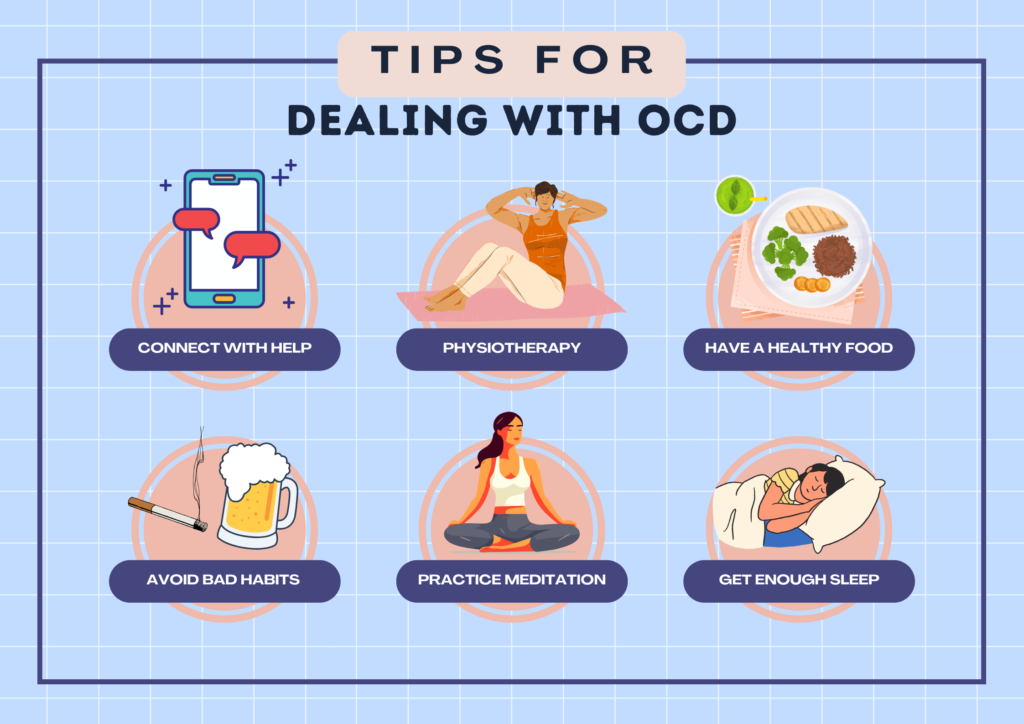
Call for Help!
When thoughts become uncontrollable and habits start to influence daily life, coping with obsessive compulsive disorder may be lonely, draining, and profoundly misunderstood. It’s crucial to keep in mind that you aren’t fragile, broken or abandoned if you are dealing with pervasive ideas, repetitive behaviors, or excessive anxiety. You also don’t have to go through this path in solitude. There is effective treatment for OCD, which is acknowledged as a medical illness. The first step to relief and recuperation may be contacting a physiotherapist, mental health specialist, or other reliable healthcare expert.
The illusion of empowerment and hope can be gradually restored by taking small steps, such as asking for help, learning coping mechanisms, moving, and letting your body and mind recover together. Building resilience, guidance, and compassion for oneself throughout the path is more important for healing than getting rid of thoughts all at once. Asking for assistance is an indicator of courage rather than weakness, and it is always available.
This article has been written by a Physical Therapist and provides general guidance on physical health & exercise. While it is grounded in professional expertise, it is not a substitute for individualized medical advice. If you are experiencing pain, specific symptoms, or have an underlying medical condition, please book a 1 on 1, 30 minute consultation with our expert physical therapist for a personalized assessment & tailored recommendations.
Pingback: The Hidden Link between Gut Health & Muscle Pain -
Pingback: Is Walking a Part of Exercise Regimen? -
Pingback: The Alarming Impact of Your Negative Thoughts on Your Body -