
An Overview of Amyotrophic Lateral Sclerosis & Spinal Cord Injury
In contemporary rehabilitation treatment, it is crucial to comprehend the differences between spinal cord injury (SCI) and amyotrophic lateral sclerosis (ALS). Although weakness, paralysis, and impairment in function might be evident throughout both disorders, the root pathology, course, and therapeutic targets are very dissimilar. In order to create secure, individualized, and goal-driven therapy protocols, physiotherapists and rehabilitation specialists must be aware of these distinctions. Let’s dive into the als vs spinal cord injury physiotherapy differences.
Table of Contents
ToggleDegeneration vs Disruption - The Differences in Pathophysiology
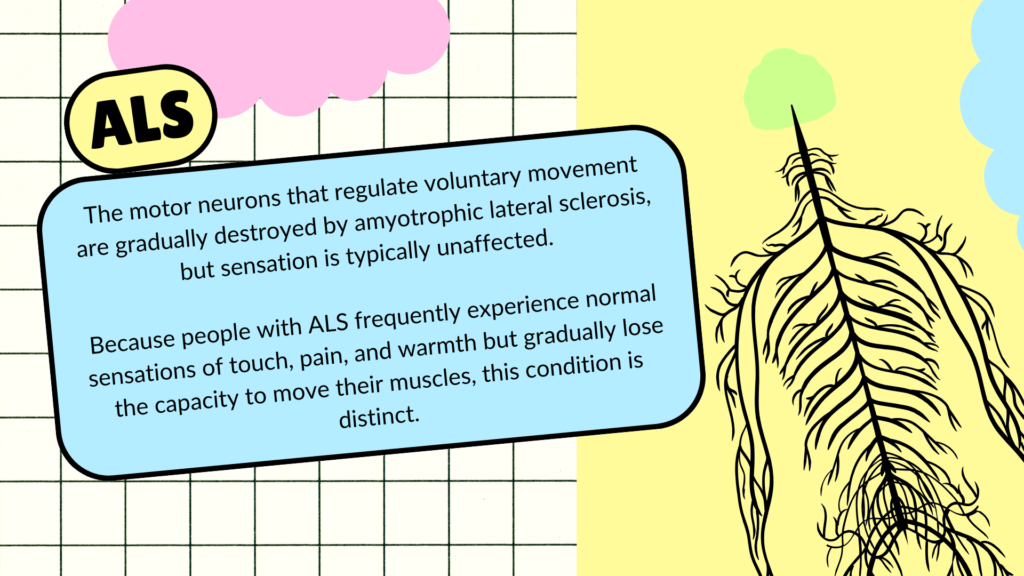
The advancing neurological disorder known as amyotrophic lateral sclerosis (ALS) primarily impacts the nerve cells called motor neurons that regulate voluntary movement of the muscles. Both UMN & LMN in the central nervous system gradually deteriorate and expire in ALS. The brain’s capacity for effective interaction in the muscles is diminished when these neurons degrade. This causes a variety of symptoms, including fasciculations, or little involuntary muscular twitches, gradual weakness in the muscles, and obvious wasting of muscles. One of the greatest dangerous side effects of ALS is respiratory impairment since the disease gradually advances to other muscle tissues and may inevitably impact the breathing muscles.
On the other hand, spinal cord injury (SCI) arises whenever the spinal cord is harmed by unintended factors including infections, tumors, or degenerative illnesses, or by traumatic events like falls and catastrophes. Since the spinal cord is the primary means of interaction among the neural network and the remainder of the body, damage to it disrupts the conveyance of impulses from nerves beyond the site of damage. Withdrawal of mobility, sensations, or combination in the impacted body parts may be the outcome of this perturbation. In contrast to ALS, spinal cord injuries typically do not worsen over time as a result of the course of the illness alone.
Clinical Presentation of the Diseases
ALS progresses slowly but steadily, including symptoms eventually impacting the respiratory and bulbar muscles as they extend from a single region to another. Patients frequently lose motor function yet preserve sensations. Depending on the severity and extent of the damage, SCI can manifest as paraplegia or tetraplegia, frequently accompanied by motor, tactile, and autonomic deficits. Crucially, unlike ALS, SCI does not naturally deteriorate over time, rendering recovery from functional impairment more possible in some situations.
The Physiotherapy Goals of Recovery
Between these conditions, rehabilitation approaches are essentially different. In ALS, the main target is to
- Reducing the rate of functional deterioration
- Sustaining freedom and mobility
- Preventing consequences like pressure ulcers and contractures
- assisting the respiratory system to improvise breathing
In SCI, the rehabilitation’s focus is to
- Optimize physical recuperation
- Encourage independence and motor relearning
- Mobility training, such as wheelchair skills and, if practical, gait training
- Take care of the colon, bladder, and autonomic nervous system to preserve important functions
The Long-term aspects of Physical therapy - ALS Vs Spinal Cord Injury Physiotherapy Differences
Physiotherapy is essential for treating the two disorders spinal cord injury (SCI) and amyotrophic lateral sclerosis (ALS), although the therapeutic rationale and treatment objectives are very different for each condition. The type of neurological impairment dictates the way rehab plan of care ought to be designed and administered, even though either might result in paresis, difficulties with mobility, and operational reliance.
Because ALS is a gradually worsening and declining condition, recovery must be handled carefully. The muscles no longer have the capacity to take in messages via the higher centers because the motor neurons have already declined. This entails that intensive strengthening programs which are frequently employed to treat numerous musculoskeletal disorders can prove to be detrimental as it may lead to excessive fatigue. Thus, physical therapy concentrates on preserving functionality instead of driving the muscles past their maximum capacities because evidence based recommendations suggest that excessive workload may hasten the degeneration of muscles in ALS.
To maintain mobility and lessen the spasticity, therapists usually employ minimal to moderate intensity aerobic exercises, stretches with hold & relax regimens, positioning techniques, and mild resistance training in place of vigorous activity. Another crucial aspect of ALS therapy is the use of measures to conserve energy. By regulating movements, utilizing adaptive devices, and altering everyday tasks to lessen exertion, patients receive instruction on ways to cope with exhaustion. Physiotherapists might additionally recommend assistive devices such as wheelchairs, walkers, or braces if the illness worsens in order to preserve freedom and avert the risks of falls.
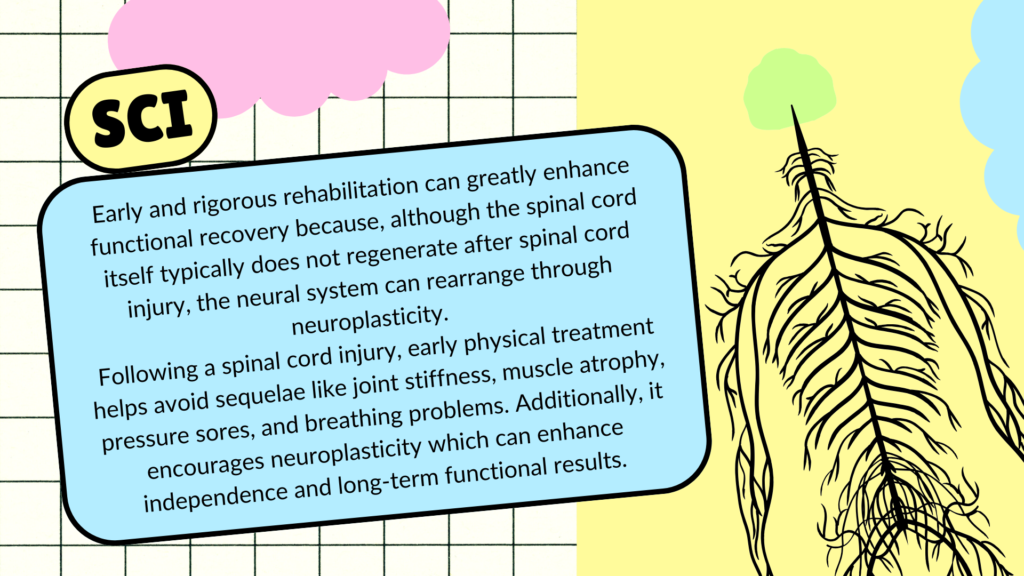
On the other hand, spinal cord injury therapy frequently takes a far additional detailed and rehabilitative strategy. Physiotherapy seeks to enhance recovery from functional impairment and foster independence as SCI is caused by a disruption of neurological networks below the neurological level instead of continuous deterioration.
In order to avoid consequences including muscular disuse, joint contractures, or cardiac deconditioning, prompt rehabilitation is essential. Rehabilitative approaches such as Task-specific training, which entails rehearsing everyday activities like transferring, seated posture, wheelchair independence, and occasionally gait conditioning, is a common component of rehabilitation regimens for people with SCI.
Another crucial element is strengthening exercises, especially for limbs that are preserved from damage & are innervated. Physical therapists frequently focus on enhancing upper limb endurance, coordination, and trunk control, the components that are necessary for carrying out routine duties on one’s own. Neurorehabilitation present day methods and innovative equipment can additionally be used in contemporary SCI recovery. Functional electrical stimulation (FES), that employs neural signals to fire up weakened or immobilized muscles, is one popular technique.
This method can promote useful motions like walking or cycling, enhance blood flow, and aid in engaging the tissues. Furthermore, in order to promote neuroplasticity, the brain’s capacity to restructure and rewire following injury, intensive rehabilitation approaches frequently emphasize recurrent execution of tasks that are necessary. Read 5 intriguing facts about Neuroplasticity.
Evidence based Rehabilitation regimens in ALS
Exercise therapy is helpful for ALS patients, but dosage must be carefully considered, according to the latest systematic reviews and meta-analyses of studies. According to a meta-analysis which included 12 RCTs with around 430 participants, systematic sessions of exercise greatly enhanced walking ability, expiratory endurance, and ultimate function results in individuals with ALS. Aerobic training improved respiratory metrics, while training with resistance had the biggest impact on enhancing function.
Still, neither tiredness rates nor certain cardiopulmonary measurements were substantially improved through such therapies, indicating that gradual, customized exercise ought to have precedence over forceful strengthening in ALS therapy. These results corroborate the idea that ALS therapy is advantageous, with the goal of preserving performance and postponing deterioration instead of regaining functionality lost.
Evidence based Rehabilitation regimens in SCI
On the other hand, studies on spinal cord injury rehabilitation show that tailored physiotherapy interventions have a greater possibility for restoration. Resistance exercising, functional electrical stimulation (FES), and task-based therapy greatly enhance strength of the muscles and functioning results in SCI patients, according to systematic reviews of randomized studies. For instance, robotics and conditioning for gait enhanced sensorimotor scoring and walking abilities, whereas resistance exercise combined with stimulation with electricity resulted in quantifiable increases in discretionary strength of the muscles.
Furthermore, the use of recent methods like acute intermittent hypoxia (AIH) has demonstrated an increase in neuroplasticity, improving endurance of muscles, posture, and gait velocity, especially in cases of partial damage. These results demonstrate that, in contrast to ALS, SCI rehab may proactively encourage recuperation through rigorous physiotherapy regimens and neuroplastic principles.
Clinical Prognosis of SCI & ALS
Spinal cord injury (SCI) and amyotrophic lateral sclerosis (ALS) have quite different prognoses. Amyotrophic lateral sclerosis is a neurological illness that worsens weakness in the muscles as well as diminished functionality as time passes as motor cells progressively degenerate. As the illness evolves, the respiratory muscles are frequently impacted, and respiratory distress constitutes a significant factor in shorter duration of life. Due to this pattern, retaining independence, controlling manifestations, and enhancing the standard of life are the primary goals of ALS therapy.
On the other hand, the severity and extent of the damage determine the consequence of SCI. Some individuals might be permanently paralyzed, whereas certain others, especially ones with partial injuries, might have the ability to restore some degree of mobility and independence with planned treatment. Plenty of individuals with SCI attain significant independence in everyday life by encompassing early physical therapy and continued rehab regimens. These variations show how crucial it is to manage both disorders through integrated comprehensive treatment, patient awareness, and practical setting of objectives.
Key Takeaways for Physical Therapists
Despite their apparent similarities with regard to motor disability, ALS and SCI constitute completely distinct neurological disorders. Acknowledging such variations is necessary to ensure successful treatment, and developing modifying therapies to fit patient preferences, advancement of the disease, and eventual goals for functioning.
FAQs
How much time does it take to fully recover with rehabilitation following a spinal cord injury?
The degree and extent of a spinal cord damage determine how well a person recovers. The majority of neurological recovery happens in the initial period of six to twelve months, particularly with prompt physical therapy intervention and rigorous rehabilitation. Nevertheless, through persistent exercise and pliant techniques, operational gains like endurance, maneuverability, and autonomy may keep improving for a number of decades.
Is it possible for physiotherapy to slow down the progression of ALS?
Physiotherapy can assist preserve movement, lessen spasticity, and postpone operational deterioration, however it cannot halt the advancement of amyotrophic lateral sclerosis. The practice of stretching, movement conditioning, and gradual, well watched exercise routines are frequently utilized to maintain independence and enhance satisfaction of living for as long as feasible.
Following spinal cord damage, is it possible to walk again?
With rigorous physical therapy, some people with partial damage to the spinal cord might be able to walk again. Movement is frequently enhanced by therapeutic therapies including exercises for strengthening, and task-specific gait training along with the use of assistive devices. Yet, based on the injury’s site and its extent, results can differ significantly.
This article has been written by a Physical Therapist and provides general guidance on physical health & exercise. While it is grounded in professional expertise, it is not a substitute for individualized medical advice. If you are experiencing pain, specific symptoms, or have an underlying medical condition, please book a 1 on 1, 30 minute consultation with our expert physical therapist for a personalized assessment & tailored recommendations.