
Breastfeeding in new moms and for prolonged time periods creates a severe postural issue which is known as “nursing hunch” or the forward headed posture. It not only weakens the neck flexor muscles, but may also lead to chronic neck pain with shoulder and backache in postpartum mothers. Targeted physiotherapy such as 6 exercises to heal the posture breastfeeding quietly wrecked with wall pushups, chin tucks, upper back arching are known to help decrease the discomfort and facilitate posture correction with confidence.
Table of Contents
Toggle
Breastfeeding is a beautiful motherhood experience that creates a special bond between the mother and the child. While this undoubtedly enhances the beauty of a relationship, it is equally true that it is a double edged sword which nobody warns the new mothers about. Postural pain might sound very simple but it is one of most common causes of chronic diseases that lead to major health concerns in the future. Forward head posture not only leads to chronic neck pain with rounded shoulders, but also significantly affects the overall confidence a mother has on her body. Incorrect upper limb posture habits may result in anterior pelvic tilts which further causes bulging belly.
With World Breastfeeding week, it is important to shed a light on the health of breastfeeding moms who are silently struggling in agony and therefore, it is necessary to understand the research backed exercises to heal and overcome this postural misalignment.
What is a Nursing Hunch?
The forward head posture, also called the nursing hunch, is a rounded shoulder malalignment that occurs due to holding the breastfeeding position over and over. This posture occurs when the mother tends to drop her head to look over the baby with her shoulders rounded and an unequal weight bearing of the baby’s body on her one arm.
Although, it is not a textbook term or medical diagnosis, yet the most common and frequently occurring issue encountered by the mothers. Postpartum evidence suggests that due to this specific feeding position, the deep neck flexor muscles are atrophied, with trapezius and levator scapulae getting shortened with time.
Medical Evidence Behind Hunch posture and Postpartum Physical Recovery
Research published in BMC Musculoskeletal Disorders, 2024 found out that breastfeeding mothers often associated their neck and shoulder pain with their nursing routines. Ojukwu et al., 2022, conducted a study in Nigeria to assess the concerns of chronic neck pain in lactating women. They found out that breastfeeding posture is a computable, self-sufficient inducer of neck pain rather than the entity of becoming a new mother itself.
Their more recent findings suggest that postpartum women experience cervical, thoracic and mid back pain and it is directly associated with their lactation posture, hence proving that the strain caused by breastfeeding extends beyond the cervical region.
Nearly half of 400 postpartum women polled in a study published in Eur Spine J, 2024, claimed to have experienced musculoskeletal pain in the initial weeks after giving birth, with household responsibilities and infant care burden being a considerable precursor. These findings are sufficient for us to understand that not every issue reported should be a textbook diagnosis to be relevant.
However, it is harmonious to fathom that hunched back postures are highly fixable in the world of physical therapy. One study found out that exercises in comparison with traditional massages improved the overall pain and posture better on the neck disability index. It has been corroborated that ergonomic nursing training four to six months postpartum alone can help reduce the impact of neck and backache in lactating mothers.
Stress related pain is also very common in mothers due to the inability to manage everything all at once. Hence, by following the stress poison rehab recovery techniques we summon that the human body retorts more quickly when given the right input signals.
The Causes of Hunch Back Posture
Although we can understand that the feeding posture is one of the leading causes of pain and discomfort, yet it is important to understand it is not the one responsible for it alone. There are numerous other factors which play their critical role when it comes to wrecking the alignment of your spine. These include:
- Asymmetrical baby carrying habits
- Stress and strain from work or office
- Phone usage during feeding causing a bent neck posture
- Weak pelvic floor muscles and function
- Lack of adequate sleep
- Hormonal Joint laxity
- Breast distention (increase in breast size)
- Baby carrying belts
- Lack of mobility
Postural strains are never alienated when it comes to the neck. It links to the entire bodily stress response motifs and causes deeper anguish. This is why accurate diagnosis of chronic neck pain is highly crucial.
6 Exercises to Heal the Posture Breastfeeding Quietly Wrecked
The methods employed in the aforementioned clinical trials served as the basis for these procedures. Commence slowly, particularly if you’re in the initial weeks of postpartum journey and always consult your physician and physical therapist before proceeding.
Chin Tucks
- Sit or stand still without tilting your head in any directions
- Skim your neck straight back to your head creating a double chin
- Hold this position for 5 seconds and then relax
- Repeat this 2 sets of 10 reps per day
While chin tuck in exercise may seem very simple, yet it is one of most studied and proven exercises for reversing the forward head posture as it instantly activates the longus coli and capitis of the neck.
Wall Pushups
- Stand near a wall and face it
- Keep your hands on the wall at a shoulder’s height
- Gently lean forward until your feel stretch on front of your chest
- Hold this position for 20 seconds
- Repeat 2 sets of 10 reps each per day
Forward head posture transpires with rounded shoulders and with prolonged time period of rounded shoulders, the chest muscles tighten and become stiff. Hence, wall pushups help relieve the pects.
Shoulder Blade Squeezes
- While sitting, squeeze your shoulder blades downward and backwards
- Hold for 6 seconds and then release
- Repeat 1 set of 10 reps per day
Clinical evidence has demonstrated that chin tucking when combined with shoulder blade squeezes, exhibit more effective results.
Wall Angels
- Stand with your back, head and arms pressed against the wall
- Bend your elbows to 90°
- Gradually slide your arms up and down while staying in contact with the wall
- Repeat 2 sets of 10 reps per day
Wall angels are highly effective because this movement combines scapular strengthening with engaging the thoracic spine, making it streamlined.
Cat Cow Stretches
- Position yourself on your palms and knees
- Interchange with your back moving towards the ceiling then towards the floor
- Move slowly with each breathing cycling
- Repeat 1 set of 10 reps per day
Cat cow stretches are beneficial in restoring the overall thoracic spine mobility that stiffens due to excessive hours of forward bent posture. It is also handy for postpartum bodies with diastasis recti (core separation).
Seated Thoracic Extension
- Sit on a chair and interlace your fingers behind your head
- Gently curve over the top of the chair while opening your chest
- Hold 5 seconds and repeat 1 set of 10 reps per day
This stretch directly opposes the sustained thoracic flexion during nursing, tackling the mid back pain experienced by the new mothers.
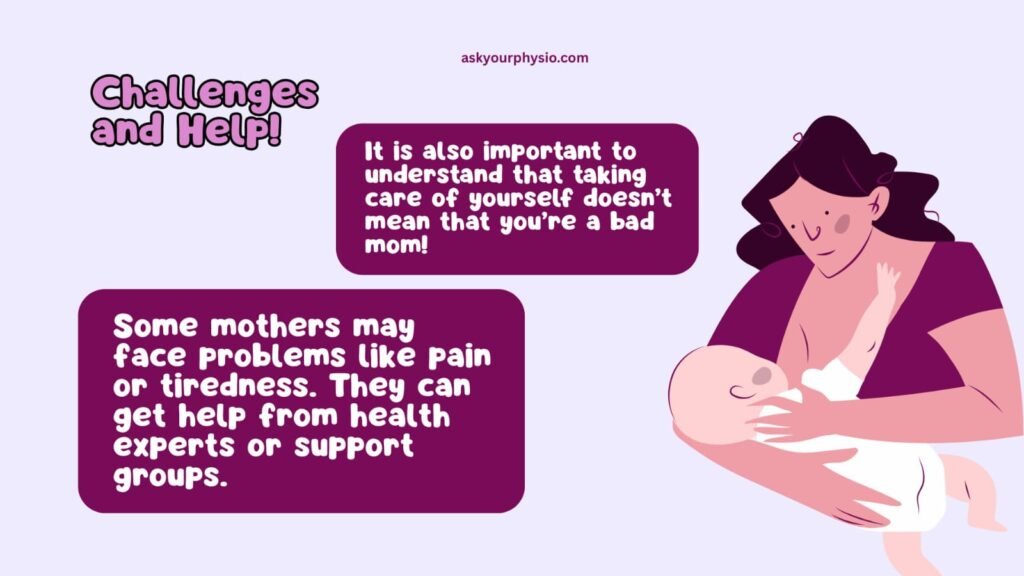
It is important for the new mothers to understand that your core and posture stabilizing systems are interconnected and both should be engaged for maximum recovery. A caved forward head posture lowers the core activation, which causes the shoulders to stay in a rounded position to compensate. This is a spiral that must be broken simultaneously in both directions. Rebuilding your pelvic floor, reduction of physical stress and adjusting the core for better functionality, are vital for postpartum recovery.
Postpartum Recovery with a Newborn Baby: Realistic Insights
Researches on ergonomic training compose an important point: gradual, small, consistent postural adjustments intensify over the timespan. Pair chin tucking exercise with your routine chores, or with shoulder blade squeezes during feeding. Save the stretches for kettle boils and when about to sit on your computer desks.
Physiotherapy Advice for Lactating Mothers
If the chronic pain persists beyond your control, or you start to experience numbness, loss of sensation, consult a physiotherapist specifically a musculoskeletal or women health specialised to have them assess you and provide you with a customized, structured plan of care as per your needs and job preferences.
Additionally, postpartum women are recuperating from substantial physiological alterations that go past posture malalignment and a more comprehensive mobility evaluation, similar to the type we outlined in our guide 10 exercises that can beat down injury even before it occurs, can detect compensatory changes in other parts of an individual prior to their ability to develop into long term illnesses.
Walking alone can also be beneficial to keep the mobility intact and have a break from exhausting daily routine. It is an incredible challenge for your body to carry and nourish a new life, and it should receive identical scientifically proven treatment as any other kind of rehabilitation.
This article has been written by a Physical Therapist and provides general guidance on physical health & exercise. While it is grounded in professional expertise, it is not a substitute for individualized medical advice. If you are experiencing pain, specific symptoms, or have an underlying medical condition, please book a 1 on 1, 30 minute consultation with our expert physical therapist for a personalized assessment & tailored recommendations.