
In the beginning of 2026, health authorities in West Bengal, India, identified fresh outbreaks of the Nipah virus (NiV) among medical staff at a private hospital. The Philippines reported an epidemic in 2014; no additional cases have been confirmed thereafter. This led to increased surveillance throughout South and Southeast Asia. There have been so many questions as to what exactly is a Nipah virus & how is it spreading so vastly. To answer all of that, let’s dive into the critical facts on Nipah virus & the role of physio.
Table of Contents
ToggleAuthorities have highlighted on multiple occasions that precautionary countermeasures have reduced transmission across impacted zones, and Nipah outbreaks, in contrast to the COVID-19 pandemic, are usually confined with strict management efforts. Since the mechanisms of transmission differ from those of SARS-CoV-2, surveillance, suppression, and early detection continue to be the top priorities for international health organizations rather than pandemic level interventions.
The Virology of the NiV
The virus is distinguished by its one-stranded negative sensing RNA genetic makeup of a pleomorphic shape. Three nonstructural proteins and six structural proteins are encoded by it. In order for the virus to adhere to the surface of the host cell, anchoring glycoproteins are essential. The generation of matured virus particles is made possible by the matrix protein, which helps the genome of the virus and polypeptides encapsidate.
During the early stages of the viral developmental process in the recipient’s body, the G and F subunits primarily participate in the binding and fusing processes to the host cell. Phrin-B2 and ephrin-B3, both of which are extensively found on the surface of mammalian neurons, endothelial cells, and epithelial cells, are the main receptors that NiV targets.
The Mechanism of Transference of Nipah Virus
Initial Entry of the Virus
The virus primarily penetrates the body of an individual through the respiratory mucosa after coming into contact with infected fluids such as urine, feces, saliva, or secretions from fruit bats or other infected animals.
Site of Replication
The Nipah virus is usually believed to initially infect the respiratory tract’s epithelial cells. It results in the fusion of neighboring host cells into a single, massive multiple nucleated unit. This multinucleated cell is known as Syncytia. Early respiratory symptoms are caused by its initial replication in the respiratory epithelium and nasal passages.
Spread in the Body
The virus can spread throughout various organs, especially the brain and spinal cord (CNS), through the circulation of blood and lymphatic system. The virus particularly travels from the lungs to the olfactory mucosa & then from the epithelium to the brain through the olfactory nerve.
Penetrating the Blood Brain Barrier
Viruses when they enter the body trigger the formation of cytokines that lead to the inflammation & these cytokines in turn can penetrate the blood brain barrier causing great amounts of neurological damage such as encephalitis.
Typical Signs & Symptoms of Nipah Virus - How does Nipah virus affect the body?
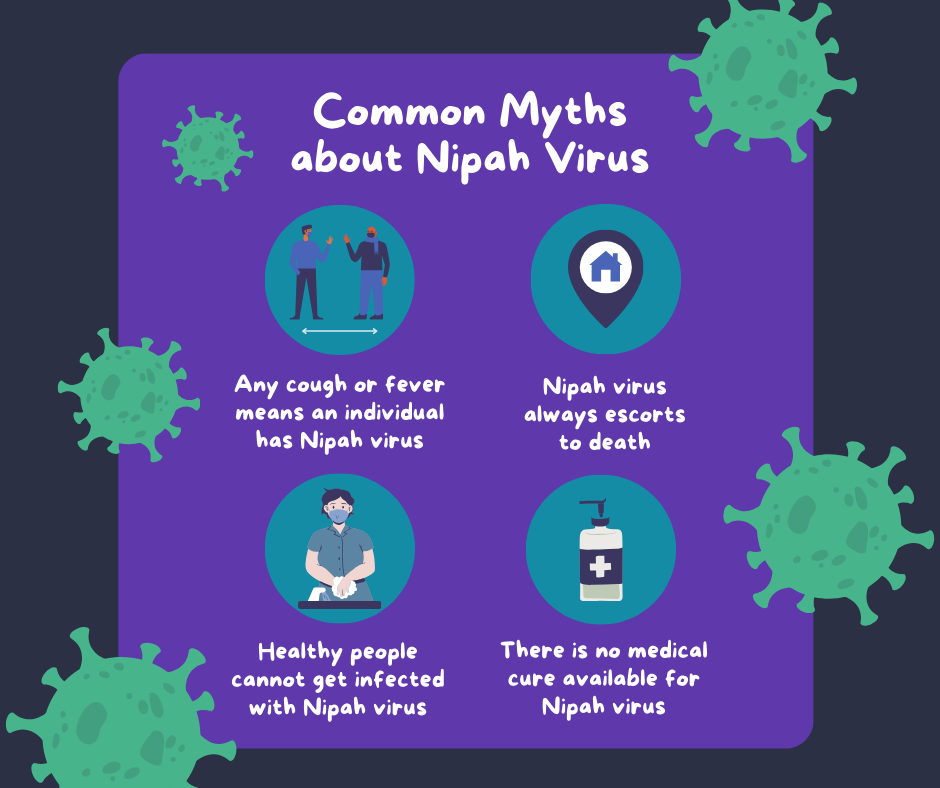
The time span in which the virus is transmitted & the symptoms develop usually takes about 3 to 14 days according to WHO. In some of the cases, the virus may be asymptomatic presenting little to no symptoms at all. However, in the majority of patients, the common clinical symptoms include confusion, lethargy, headache, flu-like symptoms, respiratory issues such as dyspnea or excessive cough. Other infected people report indicators of the virus such as chills, fatigue, myalgia, emesis & diarrhea. The severity of the symptoms develop gradually with escalation in neurological issues such as brain swelling also known as encephalitis & thereby leading to death along with respiratory distress syndrome.
Severity of the Virus
One of the greatest rates of fatalities amongst viral infections is caused by Nipah virus infection; historically, this percentage has ranged from 40 to 75 percent, based on the severity of the outbreak and medical attention. Therefore, the Nipah virus has been classified as the precedence microorganism by the World Health Organization.
Transmission of the Nipah Virus - How is Nipah virus transmitted?
Humans can contract the virus by eating crops or fruit items, including raw dates or their juice that has been contaminated by infectious fruit bats, or by coming into close contact with diseased animals, such as horses, pigs, or bats. Pigs and other farm animals are susceptible to serious illness from the virus as reported by WHO Nipah Virus Fact Sheet.
Humans might potentially contract the Nipah virus from one another. It is frequently documented in medical facilities as well as among close relatives and caregivers of ill individuals. When prevention and control of infections methods like wearing protective clothing, frequent disinfecting and cleaning surfaces, and practicing good hand hygiene are not properly implemented in cramped, inadequately ventilated healthcare institutions, the likelihood of infection might rise.
Complications of the Virus
Encephalitis – One of the most fatal complications of NiV is the progression towards the inflammation of the brain. The neurological symptoms headway from confusion to seizures to encephalitis & eventually leading to coma or brain death.
Respiratory Distress & Failure – Acute respiratory distress can result from severe Nipah virus induced pneumonia that damages tissue in the lungs and disrupts gas exchange. Patients may need ventilatory support to sustain proper breathing as oxygen levels fall.
Multi-Organ Failure – Once in the circulatory system, the virus can impact the brain, heart, kidneys, liver, and other organs in addition to the lungs. Accelerated progression of symptoms and an increase in the severity of the disease are caused by this widespread involvement.
How Physiotherapy Can be Beneficial for the Respiratory System? Evidence based Facts
Lung functioning, respiration dynamics, and general respiratory health have all been shown to be impacted by physical therapy, especially respiratory physical therapy and pulmonary rehabilitation. Evidence shows that structured respiratory therapy regimens can help:
Improvise the Pulmonary Function – Chest Physiotherapy along with appropriate postural drainage techniques & training the respiratory muscles when implemented rightly have shown to ameliorate the overall lung volumes which includes Forced Expiratory Volume in First Second & Forced Vital Capacity. Furthermore, it has also been proven to exhibit significant improvements in the overall Lung Capacity, gaseous exchange & muscle endurance.
Augment the Capacity of Exercise & Endurance – Personalized & structured chest physical therapy programs have been shown in systematic reviews to enhance the overall life quality satisfaction in patients with persistent lung conditions, decrease symptoms such as shortness of breath, and increase exercise tolerance thereby improving the endurance.
Pulmonary Hygiene Techniques to clear the Airways – Chest Physical therapy techniques such as percussions, vibrations & shaking aids in the mobilization and clearing of airway fluids, that’s essential in situations involving substantial mucus or compromised ventilation.
Encourage the Effectiveness of Therapeutic Ventilation – In patients with conditions like chronic obstructive pulmonary disease, breathing techniques and inspiratory muscle conditioning performed within the house may assist with maintaining improved respiratory endurance and lessen dyspnea during normal daily tasks.
According to the research, physiotherapy promotes the exchange of gases, stimulates the muscles of respiration, increases functional capacity, and optimizes breathing mechanics; all of which are linked to improved pulmonary wellness.
The Benefits of Physiotherapy Before & After Infection - What is the role of Physiotherapy in Nipah Virus?

Building Resilience with Physiotherapy Prior to Infection
Research on respiratory rehabilitation indicates that a healthy pulmonary as well as muscular apparatus might assist the human organism cope better with the physical demands of catastrophic respiratory infections, regardless of whether no treatment may eradicate a viral infection like the Nipah virus. Lung volumes, capacity to exercise, respiratory endurance, and complaints like dyspnea have all been demonstrated to benefit with structured respiratory muscle training, which includes inhalation and exhalation strength of the muscles activity. This suggests better functional tolerance pursuant to stress and more effective breathing dynamics.
Additionally, studies show that by enhancing metrics like peak inspiratory pressure and efficiency, breathing drills and pulmonary rehabilitation therapies can improve comprehensive respiratory performance and standard of life in individuals with compromised lung function.
Day to day breathing exercises such as diaphragmatic breathing, pursed lip breathing as well as active cycle of breathing techniques can help clear the lungs from secretions, build up the stamina & oxygenation capacity & improvise the overall function of the lungs. Although the body’s response to physiological stress is reflected in these supporting and promoting resilience impacts, they do not directly treat or prevent the fundamental viral infection itself, even though they are significant components to functional recuperation and management of symptoms.
The Role of Physiotherapy After Acquiring the Infection - The Secondary Management of the Damage from previous Evidences
Physical therapy has been demonstrated to offer significant supportive advantages in both acute and long term treatment for patients recuperating following significant respiratory viral infections, including COVID-19. When used in the acute management of patients with severe COVID-19, clinical trials show that chest physical therapy and specific breathing techniques can enhance the efficiency of the lungs, respiratory exchange of gases and even shorten time in the hospital.
When compared to conventional care alone, patients undergoing planned physiotherapy sessions showed notable improvements in oxygen saturation, spirometry parameters (FVC, FEV₁), and total breathing efficiency, indicating improved relief from symptoms and physiological results.
Respiratory rehabilitation techniques substantially enhance breathing difficulty, capacity to exercise, pulmonary function, and standard of life in COVID-19 patients after their discharge, according to comprehensive reviews and meta-analyses. These studies also highlight improved aerobic endurance and decreased permanent impairment with physical therapy assistance.
Although there is currently little concrete research supporting for Nipah virus rehabilitation because of its out of the ordinary properties & number of cases, however, similarities with other respiratory conditions suggest that physiotherapy may be used in addition to the first line treatment to relieve symptoms as well as complications, encourage the return to everyday tasks & routines & preserve the overall bodily function as opposed to combat the viral infection itself.
Nipah Virus VS COVID-19
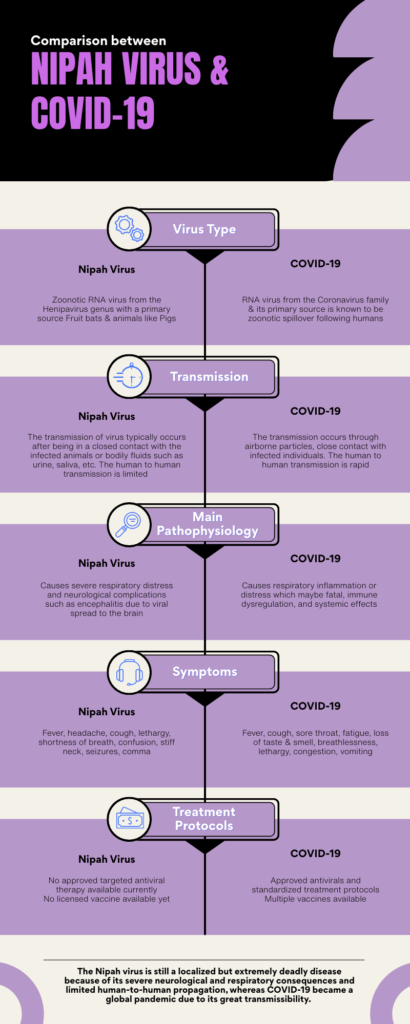
The collation between nipah virus & COVID-19 is due to the public’s recollection behind the COVID-19 outbreak and increased awareness of newly developing viral infections that bring similarity between the Nipah virus and COVID-19. Concern and comparison are naturally prompted by every emerging or resurfacing zoonotic transmission, especially one that involves respiratory signs, as COVID-19 showed how a hitherto unidentified virus might quickly overpower healthcare systems around the world. Parallels seem obvious because the two viruses can cause serious disease, necessitate isolation and prevention procedures, and put a heavy burden on the healthcare system.
Comparing one to the other also has a useful function: it makes important distinctions between dissemination, severity, readiness, and treatment accessibility clear, enabling the general population and healthcare providers to comprehend true risk thresholds. Such analogies are crucial for interpreting danger assessment, directing public health actions, and averting needless fear through educated awareness not to suggest that the Nipah virus will proceed down the identical path as COVID-19.
There is no doubt about it: a key component of post-COVID recovery is systematic rehabilitation. However, how does that appear in practice? A thorough physiotherapy evaluation that pinpoints certain limits, such as diminished lung capacity, low cardiovascular endurance, or widespread muscle weakness, often marks the start of the trip for many patients. This individualized process reflects the very essence of proven physiotherapy for COVID recovery, where tailored assessments guide targeted interventions that address each patient’s unique challenges and help restore function step by step.
Point to Ponder
Since the Nipah virus is still an important menace to the community, investigators are currently working to understand its sources, transmission patterns, and clinical signs. Even while fundamental management is still centered on medication, prevention, and inspection, research is still being done on complementary and complementary care approaches that could help patients.
The purpose of exploring the role of physical therapy before & after acquiring the virus is to reconnoiter its chances to be one of the secondary treatment options whilst fighting the virus. It is vital to understand that physiotherapy is subordinate supportive therapy not a substitution to the first line of treatment whilst treating a viral infection.
It could be helpful in controlling the severity of the symptoms & managing the aftercare of the virus. The aim of this blog is to scrutinize the depth of secondary care that could be potentially embodied into upcoming holistic approaches, incorporating a well formed respiratory & musculoskeletal therapy regimen parallel to advanced medical treatment plans & strategies.
This debate helps in stimulating a thought provoking idea & opens the window to future research as to explore the benefits of physical therapy & find out the aspects to which physical therapy can complement improving patient functional outcomes & how it can be amalgamated into multidisciplinary treatment approaches in viral outbreaks.
This article has been written by a Physical Therapist and provides general guidance on physical health & exercise. While it is grounded in professional expertise, it is not a substitute for individualized medical advice. If you are experiencing pain, specific symptoms, or have an underlying medical condition, please book a 1 on 1, 30 minute consultation with our expert physical therapist for a personalized assessment & tailored recommendations.