
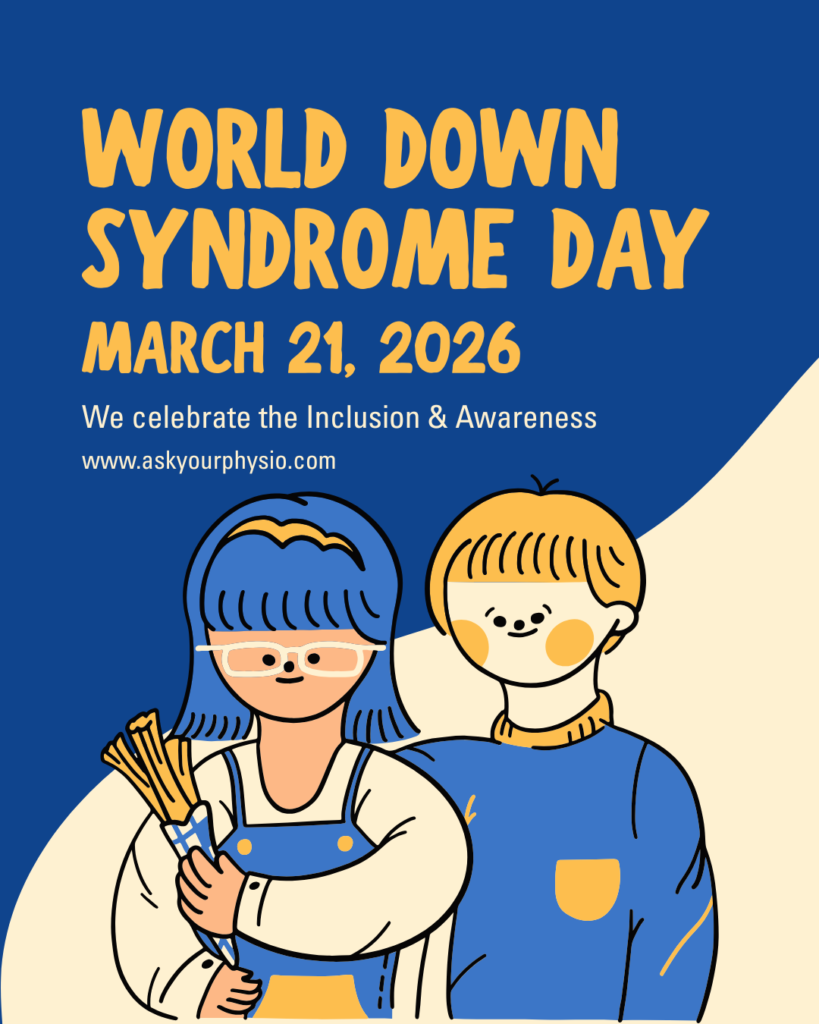
World down syndrome day is celebrated every year on 21 March to raise awareness of people with Down syndrome and the value of diversity and opportunity for all are brought to the public’s attention. Trisomy 21, another name for Down syndrome, is a genetic disorder brought due to an additional duplication of chromosome 21. Physical disabilities have a substantial impact on freedom and the standard of life, even though they are frequently linked to cognitive difficulties.
Table of Contents
ToggleIn order to address these physical issues throughout the lifespan, we are here to elucidate the importance of down syndrome awareness & the role of physical therapy. Lets dive into down syndrome & physical therapy: an exclusive guide to improving mobility & independence.
Physiology of Down Syndrome
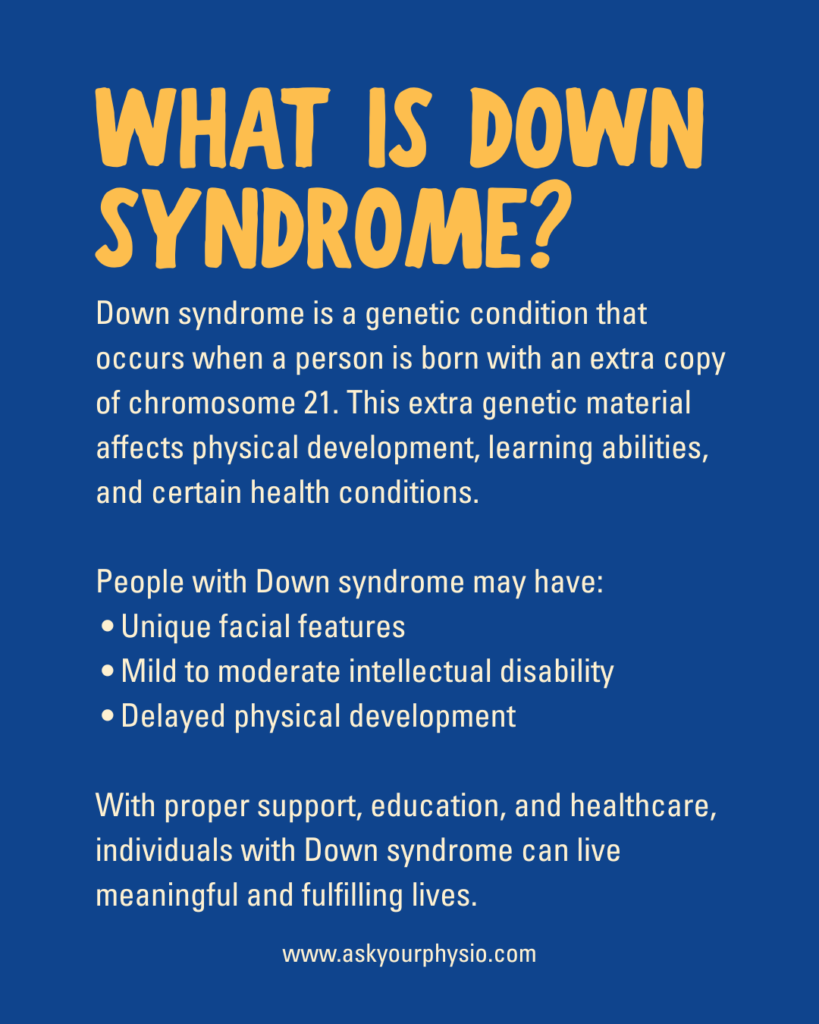
An extra copy of chromosome 21 results in Down Syndrome, which leads to the production of excessive amounts of proteins & enzymes which in turn interfere with the body’s growth & development. The brain, heart, muscles, endocrine system, and the skeletal system are all impacted by this inherited mismatch. The additional chromosome also has an influence on the development of the brain, resulting in reduced brain capacity, particularly in the hippocampus which is responsible to store the memory and cerebellum mainly functioning to maintain the sequence, affecting learning, balance, and coordination.
Later in life, Down syndrome can seriously impact several parts of the body: many people have congenital heart defects coming from the time of birth, endocrine dysfunction which may frequently cause thyroid disorders, and excessive production of the precursor protein for amyloid gene on chromosome 21 increases the likelihood of early-stage Alzheimer’s disease.
Because of this, physical activity, cognitive health, and early preventative techniques are crucial throughout life. You can learn more about how brain traumas and neurological disorders impact over time neurological wellness in our comprehensive guide on The Hidden Link between Trauma & Dementia.
Persistent physical activity and physiotherapy are crucial for maintaining independence and general health since people may eventually experience obesity, joint degeneration, and decreased aerobic capacity.
Recognizing the Physical Difficulties of Down Syndrome
According to research, people with Down syndrome frequently encounter:
- Low muscular tone, or hypotonia
- Laxity of the ligaments
- tardy development of motor skills
- Deficits in motor coordination and balance
- Diminished cardiovascular health
According to a National Institutes of Health clinical study, hypotonia and hypermobility of joints considerably impede the development of motor skills and autonomy in daily life.
Milestones of Development: Evidence based Insights
Although they typically follow the same developmental sequence, children with Down syndrome reach milestones in growth later than ordinarily developing youngsters. Research on development and clinical recommendations indicate that low tone, ligament laxity, and decreased muscle strength cause motor achievements like sitting and walking to happen later in life. According to chronological milestone maps, those who have Down syndrome usually reach unassisted sitting around the ages of 8.5 and 1.5 years and walking within the ages of 19 and 36 months.
These milestones are delayed than those of children who are normally developing, as they nevertheless follow the standard chronological sequence. Evidence indicates that children who get initial physical therapy and activity-centered remediation develop their motor abilities quicker and have enhanced functional results over the years, which makes prompt rehabilitation crucial. Higher levels of prompt rehab plan of care showed positive correlation with better physical skill acquisition in infants with Down syndrome, according to a long-term study published in PubMed.
Physical Therapy Assessment & Treatment
For personalized plan of care, assessment is the key as every child with down syndrome might present with different issues that should be addressed. Evidence shows that a comprehensive assessment of a child with down syndrome should involve:
- Evaluation of the tone (Hypotonia)
- Postural control & mechanism
- Gait
- Balance
- Functional autonomy skills
The Critical Intervention time span: 0-5 Years
Multiple researches have shown that physical therapy intervention is crucial for the overall motor development & functionality of children with down syndrome. According to a systematic review that was published in Scientific Reports, restorative exercise regimens greatly enhance motor performance and foster the growth of motor behaviors among infants between the ages of 0 and 3.
Initial childhood is a critical time for both neurological and physical development. Prompt intervention usually involves the implementation of activities such as rolling to the tummy for tummy time, assisted sitting & standing & activity specific training that may help achieve the milestones in future. Initial posture education is crucial, as evidenced by an empirical investigation reported in Pediatric Physical Therapy that indicated children with Down syndrome who began tummy time shortly thereafter improved their physical abilities more quickly than those who initiated subsequently.
In later stages of life such as school age children, physical therapy can help improve coordination, social participation & functional independence. Active children with down syndrome demonstrate better functional autonomy.
Down Syndrome & Physical Therapy: An Exclusive Guide to Improving Mobility & Independence
Physical Therapy Treatment Strategies
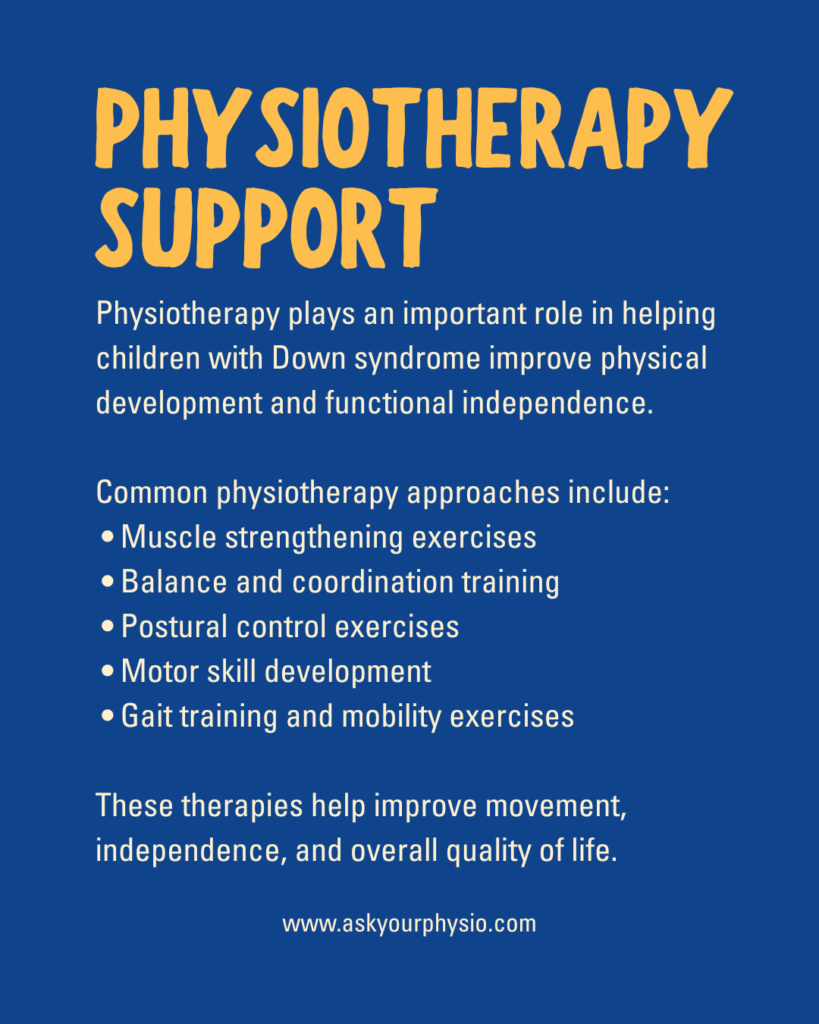
Strengthening exercises: Strength training enhances stability of the joints, muscle endurance & strength, and the capacity to carry out everyday tasks like taking stairs, walking, and sit to stand.
Balance Training: By enhancing the control of posture, equilibrium, and coordination, balance training lowers the likelihood of falls and increases freedom of motion.
Gait Assessment & Training: Conditioning the gait enhances walking efficacy in general, as well as the sequence of steps, step length, and balance.
Aerobic Activity: By enhancing cardiovascular capacity, endurance, stamina, and general wellness, aerobic fitness enables people to maintain their independence and levels of activity.
The World Health Organization states that since consistent physical functioning & activity enhances the cardiovascular endurance, strength of muscles, accessibility, and mental health, it is crucial for people with limitations. Additionally, subsequent medical problems including coronary artery disease, diabetes, and decreased functional autonomy can be avoided with physical activity. To safeguard general well-being and enhance the standard of life, the World Health Organization advises people with different abilities to engage in frequent yet moderate amounts of exercises.
Long term Benefits of Physical Therapy
- Enhanced motor abilities
- Improved coordination and balance
- Greater self-reliance
- Increased involvement in everyday life
FAQs
What is the overall life expectancy of people with Down Syndrome? How long can they survive in usual cases?
Depending on their medical treatments & health conditions, individuals with Down syndrome can now live longer than 60 years.
Can children with Down Syndrome perform basic activities like walking normally?
Indeed, the majority of kids with Down syndrome are able to walk and attend educational institutions, and numerous people are capable of living and working somewhat independently with assistance.
Why does Down Syndrome affect the tone of the muscles?
Low muscle tone is caused by the variations in the development of muscles & connective tissues thereby impacting the overall strength, endurance, balance & motor skills of an individual.
Do individuals with Down syndrome get an early onset of Alzheimer's?
Indeed, individuals with Down syndrome are more likely to get Alzheimer’s disease, frequently at a younger age reportedly in their 50s.
Why is early physical therapy treatment crucial for people with Down syndrome?
Early physical treatment enhances walking proficiency, development of motor skills, coordination, and independence in day-to-day activities.
Which health issues are most prevalent in people with Down syndrome?
Cardiovascular deficits, thyroid conditions, hearing and vision issues, excess weight, and unstable joints are common health issues in individuals with down syndrome.
Can individuals with Down syndrome engage in physical activity and sports?
Yes, people with Down syndrome are capable of participating in physical activity and sports given the right guidance and instruction.
What does Down syndrome's atlantoaxial instability mean?
Due to the instability of the first & second vertebrae of the neck, there is a greater chance of spinal cord damage from prolonged neck mobility.
Is Down syndrome curable?
Counseling, learning, and physical therapy can greatly enhance autonomy and the standard of life, but there is no specific treatment available yet.
Can people with Down syndrome receive genetic therapy or gene replacement?
Since Down syndrome is caused by an additional duplication of chromosome 21 within each cell of the body, there is presently no authorized gene transplantation or alternative gene treatment. In order to enhance growth and the excellence of lifespan, pediatric physical therapy, schooling, and supportive assistance are currently the main strategies of treatment. Research is still being conducted to investigate potential remedies at the genetic level.
This article has been written by a Physical Therapist and provides general guidance on physical health & exercise. While it is grounded in professional expertise, it is not a substitute for individualized medical advice. If you are experiencing pain, specific symptoms, or have an underlying medical condition, please book a 1 on 1, 30 minute consultation with our expert physical therapist for a personalized assessment & tailored recommendations.