
Recuperating after suffering from burns is a process that tests one’s vitality, independence, and mental fortitude in addition to repairing the skin. Every physical activity, stretch, and movement helps restore functioning and liberty. In recent times, developing AI based technologies are intervening in this progress by not only giving actual & timely feedback, monitoring & observing patients constantly but also governing the patients about individualized rehabilitation treatment regimens. This blog studies how empowering use of AI in burn rehabilitation can enhance the overall functional outcomes of the patients.
Table of Contents
ToggleAccording to the World Health Organization, over an estimate of 11 million individuals are affected with burn injuries yearly. Numerous survivors experience persisting problems like stiffness in the joints, fatigue of the muscles, and restricted agility after receiving urgent medical care, underscoring the vital necessity for systematic physiotherapy.
Notwithstanding its significance, regular and successful rehabilitation is frequently challenging because of discomfort, restricted availability of physiotherapists, or an absence of remote supervision. AI supported technologies present a viable way to fill the disparity in this situation, guaranteeing that patients stay on course and have improved therapeutic results.
The Physiology of Burn Injuries
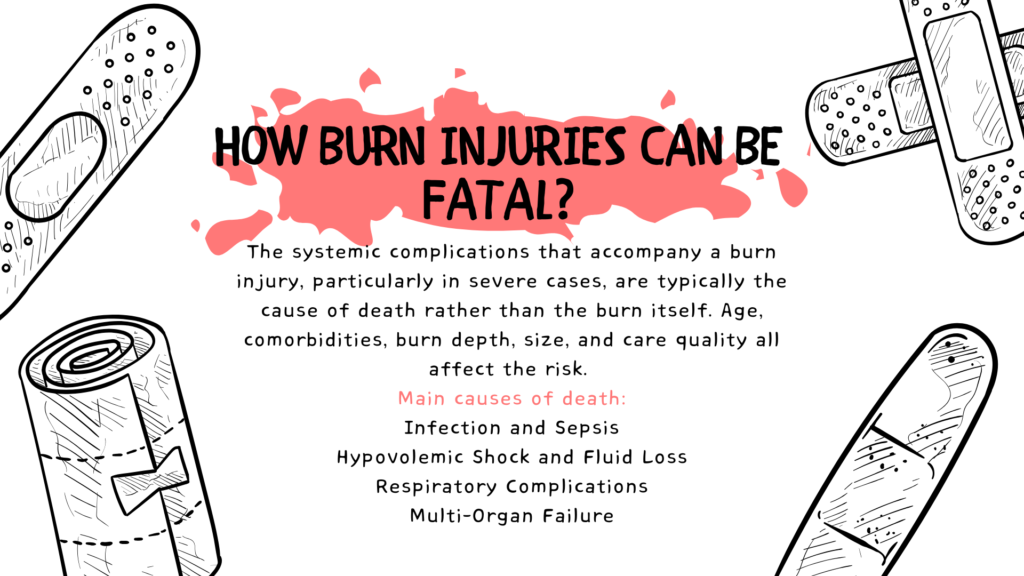
Injuries caused by burns impact more than just the superficial layer of the skin & its integrity. The deeper tissues, fascias, dermis, epidermis are harmed by burns. Since the skin serves as the body’s main line of defense, harm sustained to it impairs its capacity to fend off microorganisms and atmospheric dangers. Because of this, burn patients are far more likely to experience difficulties throughout the recuperation period including infections and fluid loss.
Straight away after a burn lesion, the body reacts by commencing a response in the form of inflammation. Even though this natural response is considered to be a step towards recovery, it brings about a lot of discomfort, pain & edema around the injured tissues. This process of inflammation triggers a cascade of reactions that assist in rebuilding the damaged tissue. Prolonged inflammation, nevertheless, can lead to stiffness in the tissues and irritation which, if improperly treated with medical attention and rehabilitation, may restrict mobility & function.
The patients may also tend to immobilize the site of burn due to extreme pain & discomfort leading to loss of mobility & flexibility of the tissues. The muscles lose their strength & power over a period of time, weaken & may also dwindle in size as a result of disuse. The joints near the injured area may begin stiff & develop contractures causing restricted to little movement. These alterations might seriously hinder a patient’s capacity to carry out daily tasks in the absence of prompt physical therapy.
The Role of Physical Therapy in Recovery of Burn Patients
When we talk about recovering from burn injuries, we don’t mean by healing the wound alone. In order to regain strength & endurance, mobility, and independent functioning, an organized rehabilitation strategy is additionally necessary. Patients are more likely to experience consequences like stiffness & contractures, weakness, and deformity when burns impact their joints, muscle mass, and adjoining structures. In order to preserve flexibility of joints, avoid contractures, and assist patients in regaining their capacity to carry out daily tasks, physiotherapy thus constitutes an essential part of management.
In actuality, physical therapy following burn injuries is seen as a protracted procedure that can take weeks or years to complete, contingent upon the nature and extent of the damage, and frequently starts on the very initial date of hospitalization. Rehabilitation of the Burn Patient
The main aim of rehab is to prevent & treat the long term tightening in the joints & maintain the adequate range of motion. When the site of damage is immobilized due to discomfort, change of dressing & excruciating pain levels, the nearby tissues & structures tighten up causing life long disabilities. Descriptive studies have laid evidence that the joint contractures constitute one of the most frequent sequelae in patients with catastrophic burns, underscoring the significance for prompt physiotherapy to preserve movement and lessen the chances of permanent handicap.
In order to maintain joint functionality and avoid tightness throughout the recuperation period, rehab protocols such as adequate stretching with hold & relax technique, proper positioning & posture correction, bracing, and vigorous physical activity are crucial. Physical therapy is also necessary to maintain the overall strength & mass of the muscles which can be compromised as a result of prolonged bed rest & disuse. Evidence shows that proactive rehab regimens can greatly increase strength and muscle mass in burned victims, enabling patients restore their ability to function and lowering issues related to muscle atrophy.
Apart from that, one of the major functions of physical therapy after surviving burn injuries is the treatment of scar tissue. The burn scars can become sturdy & limit the flexibility of the tissues as well as the entire limb. Rehab protocols such as scar mobilization, range of motion exercises of the entire limb & stretching, can help restore the strength & mobility in the affected area. Systematic physical therapy sessions can greatly enhance independence in daily activities and the general standard of life outcomes for burn survivors, according to data from burn rehabilitation centers.
Empowering Use of AI in Burn Rehabilitation
What are AI Based Devices?
Recent developments in AI are revolutionizing rehab by enabling medical professionals to constantly track patients as well as customize treatment plans using information in real time. Technologies powered by AI are becoming more and more incorporated into computerized physical therapy services, wearable sensors, and surveillance devices employed in the field of burn rehab.
In order to provide more secure and productive recuperation regimens, these innovations gather biophysiological and physical activity information from patients and use algorithms powered by machine learning for interpreting it. Integrating Physical Activity and Artificial Intelligence in Burn Rehabilitation: Muscle Recovery and Body Image Restoration
Of all the devices, the most auspicious AI-driven technology is the use of wearable biosensors. These devices help track down the data regarding the temperature of the skin, sweat configuration, the levels of hydration in the body as well as the inflammatory markers. Clinicians can identify early indicators of challenges like loss of fluid levels in the body, hyperthermia, or inappropriate demand on mending components by using artificial intelligence algorithms to analyze such information feeds. Rehabilitation programs can be modified in immediate fashion thanks to such continuous evaluations, enhancing the safety of patients and maximizing healing results.
Other than that, computer vision-based movement analysis, is one of the most stupefying emerging technology devices that uses AI powered cameras to track down the position & posture of the individuals rather than having them wear the device. AI tools can measure joint ranges of motion, identify improper patterns of movement, and interpret motion-tracking sensors or video records to determine how effectively an individual executes activities.
Through the use of programs that identify body cues and patterns of movement, these devices enable therapists to quantify operational gains throughout physical therapy in a transparent way. According to studies, smart devices and tracking motion gadgets are useful tools for directing treatment sessions since they can precisely evaluate the way a patient moves & perform tasks during their session of rehab. Intelligent biosensors for human movement rehabilitation and intention recognition
Another significant emerging treatment innovation is the AI-supported tele rehabilitation platforms which includes many unique projects such as Wizecare, SmartRehab, Rehabilitation Gaming System, PLATINUMS, CUREO etc. These technologies allow for monitoring of patients remotely throughout at home treatment by combining sensors worn by patients, smartphone apps, and cloud-based statistics. Sensor data is sent to professionals so they can assess achievements, modify training regimens, and take appropriate action.
For individuals who are unlikely to be able to join regular in-person treatment appointments, this computer-based form of therapy enhances availability and promotes continuous treatment far from the medical facility setting.
How can these AI devices help burn patients?
Feedback during Exercises – These technologies can help detect & collect the real-time data of the patients & can alert if they aren’t performing well or if there is any need of urgent medical attention. This quick input guarantees that therapeutic activities are carried out adequately and efficiently while lowering the danger of injuries associated with exercise.
More Effective Home-based Exercise Regimen – Despite being released from the hospital, several burn victims need continual physical therapy, and regular visits to the clinic may prove to be challenging because of factors like expense, travel distance, or limitations in mobility. With the use of virtual rehabilitation services, patients can carry out recommended activities at their residence whilst being observed over from a distance by medical specialists.
Detection of Abnormal Movement Learning Patterns – Burn injuries could lead to excruciating pain & discomfort often causing the patients to adapt to a different set of movement patterns as well as developing comorbidities such as contractures. These patterns could be fatal & due to the compensatory cause putting further strain on the normal mobility & biomechanics that should be restored. Movement & Posture trackers can be used to detect the abnormal patterns & patients can re-learn the activity with prompt feedback.
Read our previous blog : Tele rehabilitation future in ICU
Complete Exercise Guide for Burn Injuries - Physical therapy regimen for Burn
- Patient education & counselling
- Range of motion exercises to prevent stiffness
- Massage of the scar area along with soft tissue mobilization to prevent the development of adhesions & restore the elasticity of the skin
- Sound & affected limb Strengthening exercises
- Gait training in case of lower limb burn injuries to restore mobility & independence
- Stretching & splinting to prevent contracture formation
- Performing daily tasks in a modified fashion to enhance motor re-learning & neuroplasticity
FAQs
When should you start a physical therapy treatment plan after sustaining burn injury?
Right away as the person being treated is medically stabilized, prompt mobilization is advised.
In burn rehabilitation, can AI take the position of a physiotherapist?
No, AI does not take the place of expert advice; rather, it monitors and supports exercises.
Will I be able to walk again after sustaining a burn injury on my lower limb?
Following a lower limb burn, you can usually resume walking. However, this relies on a number of factors, including the burn’s severity, the extent of damage to tissues, the area that was impacted, the duration and standard of physical therapy, and whether any consequences like infections, contractures of joints, or muscle or nerve impairment ensued.
Can burn patients safely participate in home-based AI rehabilitation programs?
Yes, in conjunction with expert supervision and safety measures.
What amount of time will it require for mobility to return following a burn?
It varies according to severity; regular therapy usually results in quantifiable gains in a matter of weeks to months.
Will my burn scar ever heal?
Yes, burn wounds can get better and mend gradually, but it totally depends on the severity that caused the burn, the treatment that was given, and any continuing therapies or rehabilitation.
Can AI reduce contractures and assist control scars?
Indeed, AI is capable of directing workouts, tracking adherence to treatment plans, and monitoring skin conditions.
This article has been written by a Physical Therapist and provides general guidance on physical health & exercise. While it is grounded in professional expertise, it is not a substitute for individualized medical advice. If you are experiencing pain, specific symptoms, or have an underlying medical condition, please book a 1 on 1, 30 minute consultation with our expert physical therapist for a personalized assessment & tailored recommendations.