
The body’s primary command and interaction apparatus, the nervous system, is made to take in information, decipher it, and plan exact reactions. It is separated into the peripheral nervous system, which consists of the nerves that link the central nervous system to the rest of the body, and the central nervous system, which consists of the brain and spinal cord. When we talk about the exquisite function of hippocampus & rehab we talk about the tiny memory storing machine organ, hippocampus & how it can facilitate the rehabilitation process.
Table of Contents
ToggleThe hippocampus, a tiny, curving region located deeply in the medial temporal lobe of the brain, is one of several specialized structures that cooperate to develop and store long term memories and facilitate learning. Balance, mobility, intellect, and other essential functions are guaranteed by other important regions like the brainstem, cerebellum, and cerebrum. An individual organ, muscle, and sensory receptor receives information from these brain regions via the PNS, enabling the body as a whole to operate as a responsive, coordinated system.
Evidence Based Theories
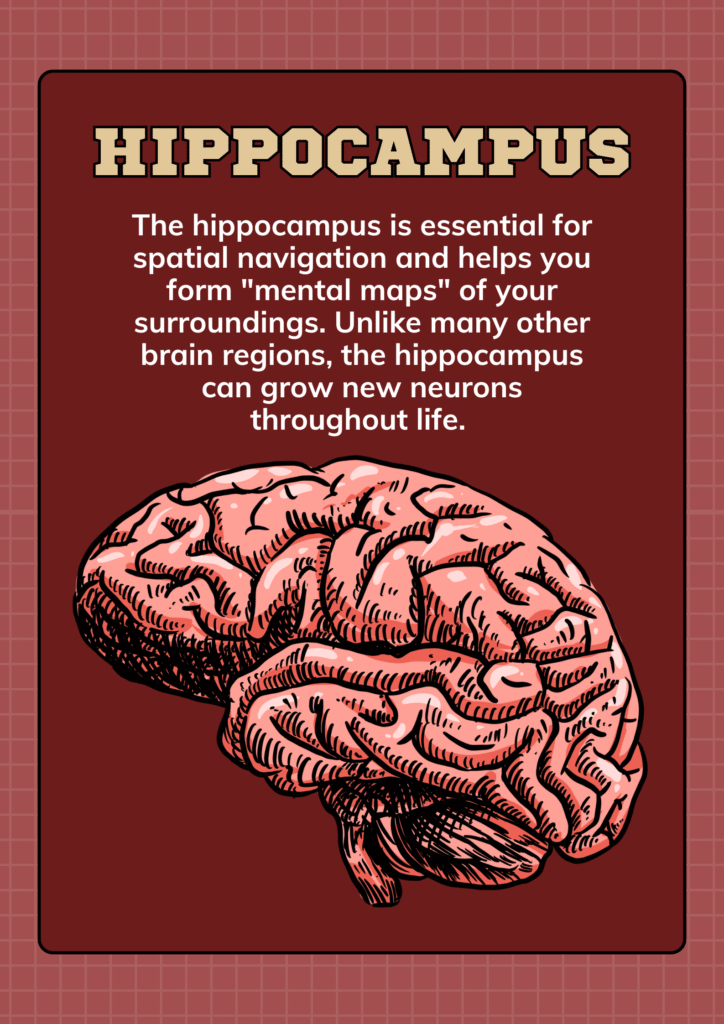
One of the brain’s most crucial regions for turning ordinary encounters into enduring memories is the hippocampus. According to research, the brain creates transient or short term memory traces when we are awake, but these are not sufficiently solid to endure without being processed further. Based on study results, the hippocampus is crucial to this change because it directs the formation of persistent memories. Neuroscientists claim that the hippocampus aids in information reorganization and stabilization so that memories can eventually be independently preserved throughout the neocortex rather than staying brittle or readily forgotten.
In line with scientific publications, our daily actions produce temporary recollections that are subsequently “consolidated” into long term storage in the hippocampus circuits. Sharp wave ripples, which are unique electrical oscillations that mostly happen during sleep and peaceful repose, are closely associated with this consolidation. By selectively replaying and fortifying neuronal connections associated with recent experiences, these ripples enable the hippocampus to rehearse memories in order to permanently encode them. The hippocampus serves as the brain’s long term memory engine by stabilizing and preparing everyday memories for long term storage throughout the brain.
How is the Hippocampus Injured?
Sleep Deprivation
Lack of sleep affects the molecular processes that facilitate recollection as well as hippocampus homeostasis. Even brief sleep deprivation reduces hippocampal synaptic plasticity such as persistent stimulation, lowers dendritic spinal density in CA1, and interferes with intracellular signaling pathways like cAMP, PKA, and mTOR that are essential for sustaining freshly formed synapses.
Practically, this results in poor processing and integration of episodic and spatial memories that is, after sleep loss, hippocampal memory cell rewind and sharp wave ripple events which typically take place while experiencing slow sleep and quiet rest, are blocked or disconnected, weakening the conveyance of memory trails to neocortical stores.
Sleep disruption is not only an acute annoyance but a mechanistic threat to hippocampal mediated memory over time. Recovery sleep can partially restore some biological parameters and basic connectivity, but several studies caution that periodic or prolonged insomnia results in lasting impairments in hippocampal organization and operation.
Dysfunctions of the CNS
- TBI frequently results in lasting impairments in sequential and interpersonal memory due to hippocampal neuronal destruction, disrupted synaptic plasticity, and disrupted neurogenesis.
- Hippocampal shortening and decreased hippocampal cortical connection are linked to ischemia and infarcts, which are tied to poorer memory results and an increased risk of cognitive impairment following a stroke.
- The hippocampus, especially CA1, is extremely susceptible to oxygen deprivation, which can cause severe anterograde amnesia and selective cell death.
- SCI causes systemic inflammation, modifications to the stress axis, and regional neuronal abnormalities despite the spinal cord’s anatomical distance; research on both humans and animals has shown hippocampus glial activation, decreased neurogenesis, and cognitive deficits following SCI.
- Hippocampal volume reduction and poor memory consolidation are associated with long term glucocorticoid exposure, mood disorders, and Alzheimer’s disease.
What happens if the hippocampus is spared but the rest of the brain is widely damaged?
The succinct, fact based response is that it’s not always the case, and it’s dangerous to treat it like a straightforward myth. While diffuse networks throughout the hippocampus, medial temporal lobe, prefrontal cortex, and other cortical regions implement memory and cognitive function, the hippocampus is crucial for encoding and consolidating some types of memory. Because they have been consolidated into cortical stores, distant or well learned memories can occasionally be recuperated even after hippocampal damage, according to clinical and experimental evidence.
On the other hand, sparing the hippocampus does not automatically preserve complex cognitive, motor, or managerial tasks if those associated cortical or subcortical areas such as frontal lobes, basal ganglia, cerebellum, white matter tracts, have been extensively damaged.
Therefore, the type and timing of the lesion, the networks that remain intact, and the brain’s ability to undergo plastic reorganization all affect the outcome. In actuality, this means that while a spared hippocampus may be beneficial for the reemergence of intermittent memory functions, it is unable to rebuild language, control over executive functions, motor coordination, or the interconnected processes required for complete functional independence on its own if those systems are compromised. Instead, successful rehabilitation depends on the reliability and retraining of the larger networks rather than just one structure.
Inside The Exquisite Function of Hippocampus & Rehab
Because it serves as the primary entry point for new experiences to generate enduring memories, the hippocampus is frequently referred to as the brain’s memory storing hub. The hippocampus is where information initially travels when we acquire an idea, maneuver a new circumstance, or go through a significant experience. In order for it to subsequently be eternally stored across the cortex, it is arranged, encoded, and reinforced here.
The brain cannot effectively transform fleeting perceptions into long lasting, recoverable memories without the hippocampus. It constantly functions as a highly specialized file system, organizing important information, connecting new and old data, and recalling it as you sleep to save it for later. Because of its special capacity, the hippocampus is the brain’s primary memory center, which is crucial for learning, remembering past experiences, and forming our identity. Significant memory and learning deficits are common in patients suffering from traumatic brain injury or stroke, which impedes recovery.
According to one study, at both short and long delays, people with traumatic brain injury displayed deficits in relational memory, which is the hippocampal dependent capacity to connect components of an event such as a person’s name, a location, and a task. A patient’s capacity to learn new tasks, retain therapeutic instructions, and apply what they have learned to everyday life may be hampered by hippocampal dysfunction since the hippocampus is extremely susceptible to harm from hypoxia, seizures, or direct trauma. In this sense, a patient’s ability to profit from rehabilitation is significantly influenced by their hippocampus health. Relational Memory at Short and Long Delays in Individuals With Moderate-Severe Traumatic Brain Injury
Furthermore, memory and cognitive training based rehabilitation therapies may assist maximize hippocampal plasticity and promote healing. For instance, cognitive rehabilitation altered brain activation patterns, especially those connected to the hippocampal region, in people with early stage neurodegenerative alterations. The results imply that selective memory therapy can affect hippocampal networks and improve patients’ capacity to store, organize, and retrieve operational details, even though direct hippocampal alterations weren’t always the main emphasis.
Therefore, adding relational association exercises, spatial navigation training, and memory strengthening activities to rehabilitation programs may activate hippocampus circuits and enhance results. Lastly, rehabilitation programs that maximize retention of memory conditions may be more successful given that the hippocampus is essential for both semantic binding of experiences and persistent memory consolidating. According to a research, hippocampal dysfunction related memory deficits have major functional ramifications for long term results and reintegration into the community.
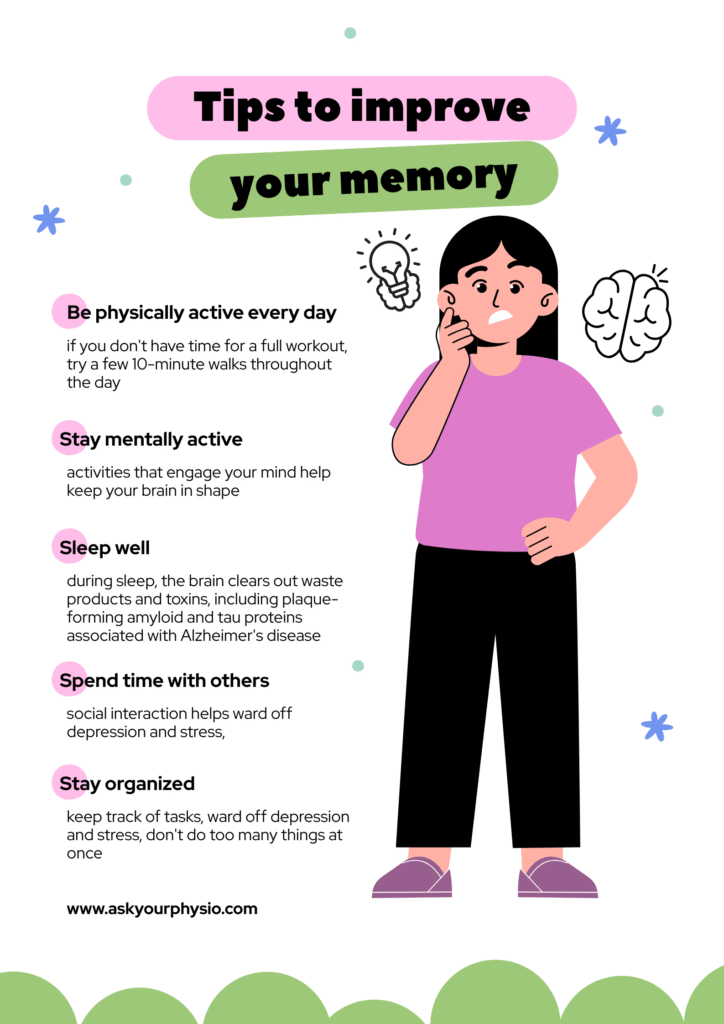
The stability of newly acquired knowledge into long lasting memory can be facilitated by strategies that enhance hippocampus function, such as making sure that patients get enough sleep and rest, organizing therapy sessions so that learned activities can be repeated and retrieved, and providing training in relevant situations. This enhances a patient’s capacity to retain gains after discharge, apply tactics in new contexts, and recall therapy instructions.
In summary, the hippocampus is important for memory, learning, and recuperation, but it is not the only organ involved. Injury patterns, sleep, and brain health all have a significant impact on the extent to which this structure can operate and how well an individual may profit from rehabilitation. True healing relies upon the integrity and collaboration of larger neuronal networks across the brain, even though a healthy hippocampus promotes lasting memory development and learning capacity. Thus, maintaining hippocampal function serves as a crucial basis for rehabilitation; nonetheless, a full recovery necessitates treating the entire neurological system, not just one area, in order to restore independence, function, and cognition.
For more interesting factual based information about the brain read our previous blog Revealing the Hidden Link between Trauma, Dementia & Physical Therapy
This article has been written by a Physical Therapist and provides general guidance on physical health & exercise. While it is grounded in professional expertise, it is not a substitute for individualized medical advice. If you are experiencing pain, specific symptoms, or have an underlying medical condition, please book a 1 on 1, 30 minute consultation with our expert physical therapist for a personalized assessment & tailored recommendations.