
World Tuberculosis Day is celebrated annually to highlight what tuberculosis is & how dangerous & deadly it could be for the community. The majority of people think that intervention plans for tuberculosis conclude with the completion of medication courses, however this is not the case. Regardless of being deemed medically cured, numerous individuals still experience fatigue, muscle weakness, dyspnea, diminished pulmonary function, and trouble carrying out everyday tasks. This is where tuberculosis rehabilitation comes into play.
Table of Contents
ToggleAdvanced research shows that tuberculosis recovery is incomplete without physiotherapy & rehabilitation is an essential component of recuperation for post TB patients especially for those who get exposed to conditions like post TB lung disease or spinal complications. This blog describes the effects of tuberculosis on the human organism, the need for rehab, and how physical therapy enables TB affected individuals to resume their regular lives.
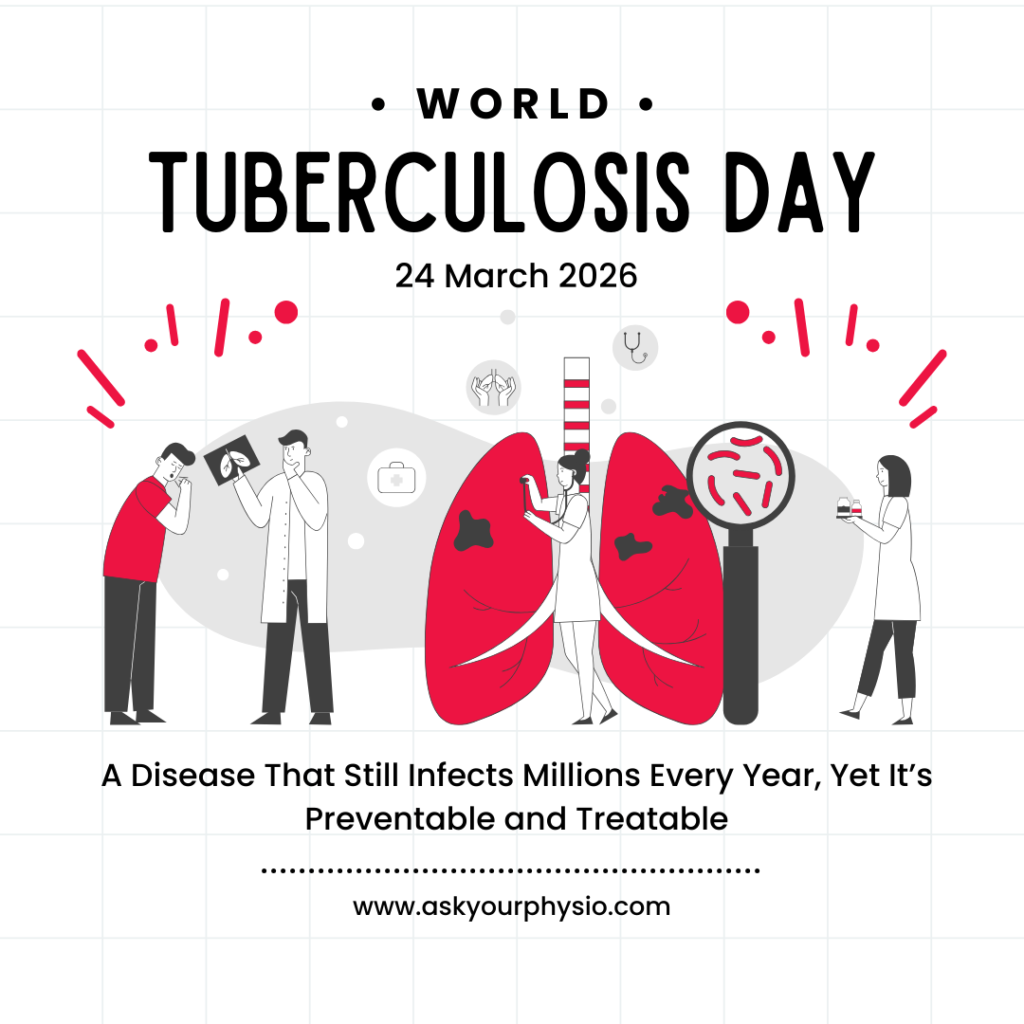
What is Tuberculosis? An Insight
Tuberculosis, also known as TB, is an infectious disease caused by bacterial agent Mycobacterium Tuberculosis, which affects the lungs & other parts of the body. There are two major types of TB
- Pulmonary Tuberculosis – affects mainly the lungs
- Extrapulmonary Tuberculosis – affects other organs and parts of the body such as spine, kidneys, lymph nodes, bones etc
The common symptoms of TB includes
- Persistent cough
- Chest Pain
- Dyspnea
- Fever
- Chills
- Night sweats
- Weight loss
- Fatigue & aching body
How Tuberculosis Affects the Normal Functioning of the Body?
In addition to the respiratory system, the body as a whole is impacted both physiologically & functionally. According to evidence, numerous individuals with TB still have the following side effects despite receiving effective medical care
- Exertional Dyspnea
- Diminished Lung Capacity
- Muscle weakness
- Lethargy
- Muscle Atrophy & significant Weight loss
- Impacted quality of life
According to research on pulmonary rehabilitation for TB patients, up to 50% of the individuals who were said to be discharged with completed medication courses reported to have shortness of breath & diminished capacity to exercise with low quality of life. Thus, this shows that even though patients who have fulfilled the required medication course for curing TB, may still experience its symptoms later on in life.
This constraint is known as Post Tuberculosis Lung Disease (PTLD), which consists of conditions such as lung fibrosis, atelectasis, bronchiectasis & chronic limited airflow to the lungs. Physical therapy, specifically pulmonary rehabilitation for TB is necessary in order to improvise the overall breathing, gaseous exchange, airway clearance & building endurance.
What are the long term effects of TB on the Lungs?
The most quotidian effect of Tuberculosis is Pulmonary Fibrosis, also known as lung scarring, that reduces the elasticity of lungs & makes the normal process of breathing even more difficult. Other than that, bronchiectasis, a condition characterized by widened bronchi with mucus infusion, may lead to severe complications such as chronic cough with sputum & chest infections. Reduced capacity for respiration, tightening of the chest, exertional dyspnea, and decreased tolerance to exercise are some of the additional long-term impacts.
Physical therapy Role in healing Tuberculosis
Physiotherapy plays a significant role in enhancing the overall lung capacity & function, muscle strength & endurance, accessibility, & general independence in everyday life. Evidence proves that supervised pulmonary rehabilitation plan of care for TB helps improve
- Lung Capacity – the maximum amount of air lungs can hold
- Exercise Tolerance – the maximum amount of exertion sustained by an individual without getting fatigued
- Standard of life
- Levels of exhaustion
- Lethargy
- Performing necessary everyday tasks
Protocols for respiratory rehabilitation often incorporate educating the patient, strengthening & endurance regaining exercises, cardiovascular conditioning, and breathing techniques. According to research, patients with tuberculosis who seek pulmonary rehab treatment exhibit notable gains in their ability to function when juxtaposed with individuals who don’t.
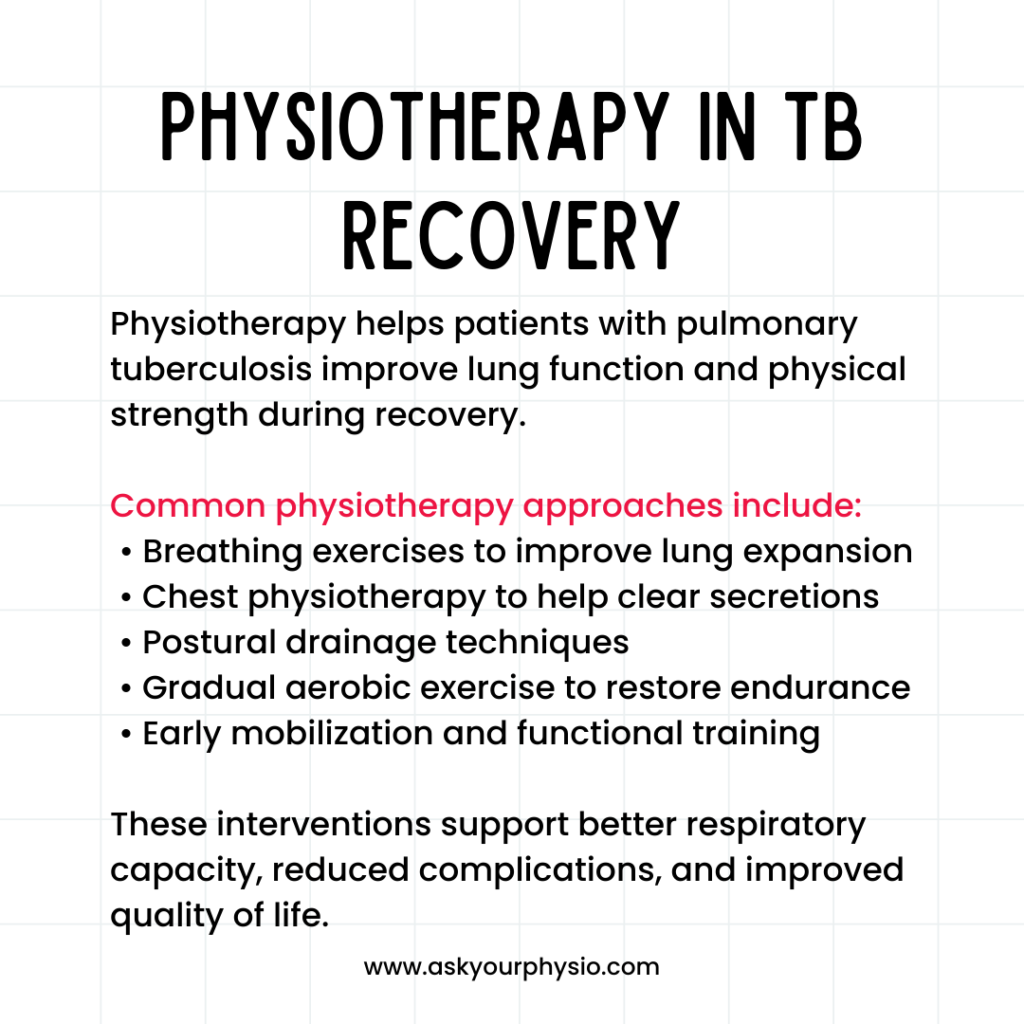
Physiotherapy for TB Patients
Chest Physiotherapy for Tuberculosis
The chest physiotherapy is used to improvise breathing & clear the airways with the help of bronchopulmonary hygiene techniques such as
- Percussions
- Vibrations
- Shaking
- Postural Drainage positions (as per patient tolerance)
Breathing exercises for TB
These include the following
- Diaphragmatic breathing (Ameliorates the gaseous exchange & lung expansion)
- Segmental breathing (Lateral & Posterior as per the lobe involved)
- Pursed lip breathing (Decreases the effects of Dyspnea)
- Incentive Spirometry (Prevents lungs from collapsing)
- Thoracic Expansion Exercises (Improves chest mobility)
- Huff & Cough (Assistive cough to expectorate the secretions is necessary)
- ACBTs
Evidence shows that Active Cycle of Breathing Techniques when implemented by the TB patients, improvise the overall pulmonary capacity & total exhalation volume , airway clearance & chest expansion circumference between maximal inhalation & exhalation.
Exercises for TB patients
Due to their extended sickness and being bed bound for a longer time period, TB patients frequently suffer from extreme weariness and weakness in their muscles.
Exercise treatment consists of
- Strengthening exercises (starting with isometrics)
- Standing balance with correct posture
- Walking distance
- Endurance & Cardiovascular conditioning
- Fatigue management
Pulmonary rehab treatment protocols that consists of aerobic & strengthening exercises are highly effective in improving the tolerance to exercise & overall standard of living according to evidence Pulmonary rehabilitation for post-TB lung disease led by TB survivors
Spinal Tuberculosis (Pott’s Spine) Physiotherapy
Spinal tuberculosis is a type of tuberculosis infection that affects the vertebrae of the spine. This TB infection causes symptoms like backache, stiffness, nerve compression & in extreme situations may lead to deformity of the spine. Once the spinal cord is compressed or deformed, the patients might feel
- Weakness
- numbness
- Difficulty in walking
- Loss of bowel & bladder control
- Formation of Abscess
- Kyphosis deformity
- Paralysis
Medications are necessary in controlling the symptoms & eradicating the infection along with structured physical therapy that helps in regaining proper postural control & biomechanics, strength & unassisted mobility. Evidence states that in order to regain mobility and avoid long-term incapacity, rehabilitation is particularly crucial in cases with extrapulmonary tuberculosis.
Physiotherapy for ICU/Hospitalized TB Patients
Due to serious infection or consequences, some TB patients need to be admitted to the intensive care unit.Regular rehabilitation enhances the healing process and assists in minimizing ICU-acquired frailty in inpatient individuals with TB. ICU physiotherapy plan of care includes
- Proper bed positioning to prevent pressure ulcers
- Passive or active assisted range of motion exercises
- Breathing exercises along with bronchopulmonary hygiene techniques
- Sitting balance & postural control
- Standing balance (static & dynamic)
- Early mobilization & out of bed techniques
- Improvised walking distance
- Performance of Basic tasks with getting breathlessness
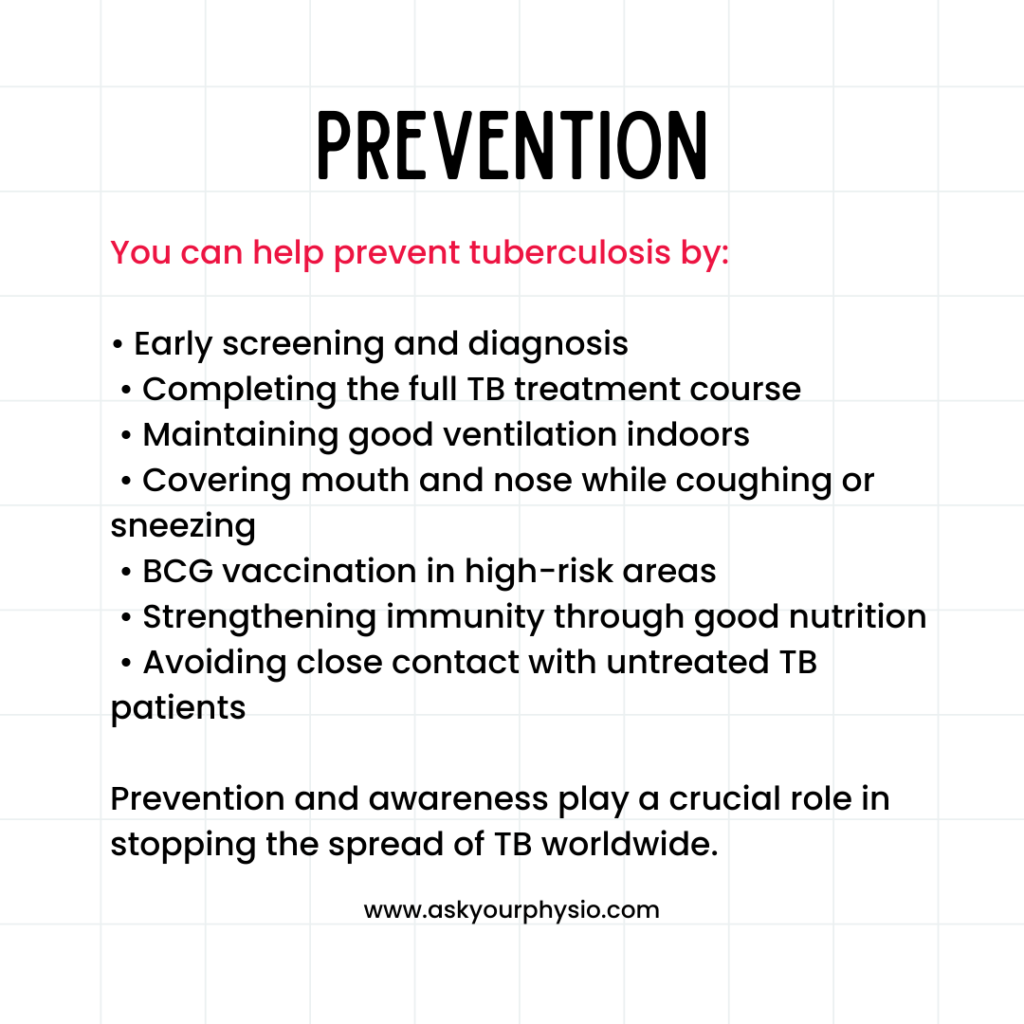
When should a Tuberculosis Patient start Physical therapy?
- On Medications = Breathing exercises & prevention of secretion accumulation
- Post ICU/Hospitalization = Breathing exercises, Chest physical therapy & early mobilization
- After Spinal TB surgery = Proper rehabilitation & exclusive plan of care as per patient’s needs
- Completion of TB treatment = Pulmonary rehabilitation along with strengthening exercises
How long does it take to completely recover from TB?
Since lung function restoration and bodily recuperation need time and energy, healing from tuberculosis typically takes more than the duration of medicines. Treatment with medicine for tuberculosis usually lasts six to nine months, but given the patient’s situation, age, diet, and degree of illness, a complete bodily recuperation might require a bit longer. Within four to eight weeks of medical care, the majority of patients begin to feel better, but fatigue, weakness, and dyspnea might persist longer than anticipated.
With appropriate physiotherapy and pulmonary rehab, pulmonary function and muscular endurance often develop progressively over two to three months. Healing can range from six to twelve months in cases of greater severity, particularly in individuals with histories of spinal tuberculosis, lung injury, or an ICU admission. Respiratory techniques, regular physical therapy, and an organized rehabilitation intervention regimen can greatly accelerate recovery and enable patients to resume their regular daily activities more quickly.
In conditions that affect the lungs, the recovery time is unpredictable but with appropriate exercises & pulmonary rehab, the treatment outcomes can be achieved. Read our guide to Long COVID-19 Syndrome.
Can lungs fully recover following Tuberculosis?
Following tuberculosis, the lungs can often heal; however, the degree of recuperation is contingent upon the severity of the infection and the timing of pulmonary physical therapy. Patients with uncomplicated tuberculosis may recover with little damage to the lungs and eventually resume regular breathing. Nevertheless, when it comes to complicated & severe instances, tuberculosis can cause irreversible lung defects such as bronchiectasis, fibrosis (scarring), and decreased capacity for respiration. PTLD is a condition in which individuals still have diminished endurance and dyspnea even though the infection has been medically managed.
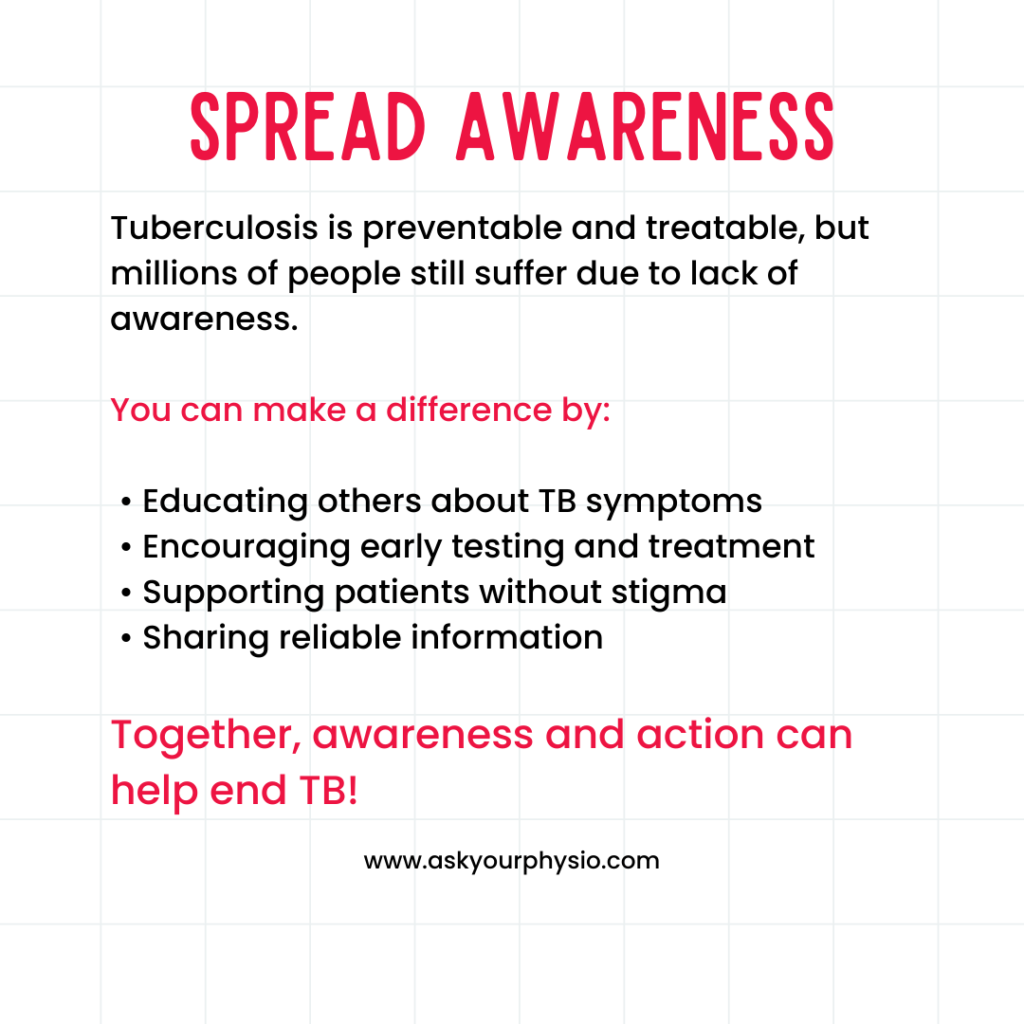
Medicines may cure the disease, but Physiotherapy completes the recovery!
On World Tuberculosis Day, the most crucial reminder is that
While treatment for tuberculosis may spare an individual’s life, rehabilitation can enable them to live again.
After discontinuing TB medicine, numerous individuals believe they’re completely well, yet they might nevertheless have muscle weakness, poor lung health, and diminished stamina. These issues can impair the standard of existence and persist for decades in the absence of structured physiotherapy. For tuberculosis patients, physiotherapy, particularly pulmonary rehabilitation, is essential for enhancing respiration, strength, perseverance, and self-reliance.
This article has been written by a Physical Therapist and provides general guidance on physical health & exercise. While it is grounded in professional expertise, it is not a substitute for individualized medical advice. If you are experiencing pain, specific symptoms, or have an underlying medical condition, please book a 1 on 1, 30 minute consultation with our expert physical therapist for a personalized assessment & tailored recommendations.