
Walking is frequently referred to as the most basic type of workout. It has virtually no knowledge arc, no costly gadgets, and no fitness facility subscription. However, one topic keeps coming up in conversations about health and physical recovery: Is walking a sufficient form for physical activity to maintain optimal health status? There is greater significance to the response than merely a yes or no. With modern science evolving rapidly, physiotherapists are often countered with this incredulity and are questioned is walking a part of exercise regimen? Let’s find out.
Table of Contents
ToggleThe World Health Organization & Center of Disease Control significantly supports the notion that walking is categorized as a physical activity regimen and it can help individuals improvise their stamina, endurance, cardiovascular abilities as well as mental contentment. Nevertheless, your objectives, chronological age, way of living, and present health status will all determine if walking solely is a sufficient form of physical activity.
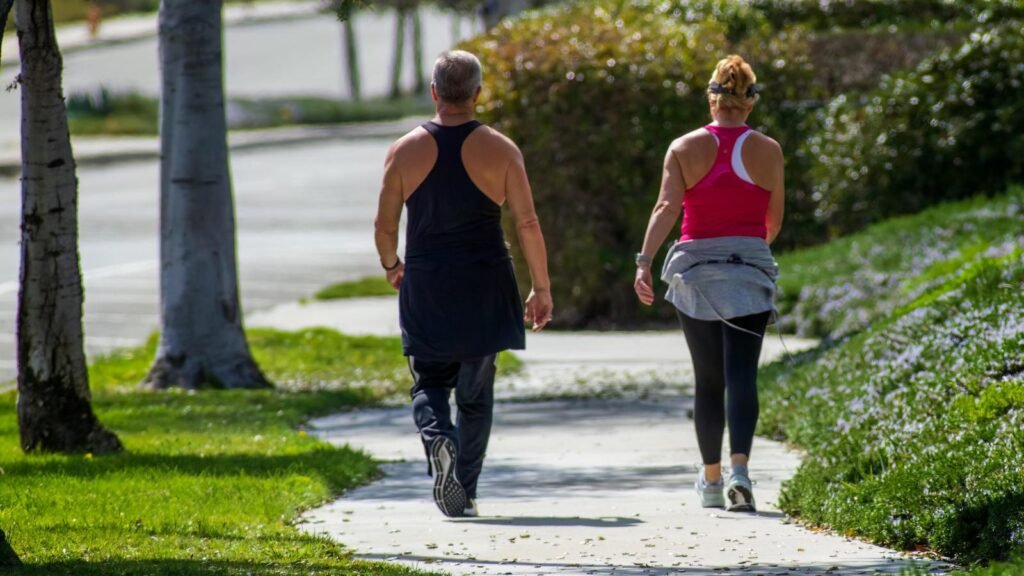
Is walking really a form of exercise?
Walking is often undervalued since it seems effortless and casual. However, walking concurrently engages several bodily functions.
Walking augments your:
- Pulse & Respiratory Rate
- Recirculation of blood
- Lung Capacity
- Stimulation of muscles
- Movement of joints
- Synchronization between neurons and muscles
According to the Global Activity Guidelines provided by WHO, brisk walking is cataloged under the section of aerobic activity and proven to boost the overall endurance, reduce the blood sugar levels & help decrease the cardiovascular group of diseases. Walking helps in stimulation major muscle groups such as:
- Hamstrings
- Glutes maximus and medius
- Quadriceps
- Tibialish Anterior
- Gastrocnemius and soleus
- Ileopsoas
- Quadratus Lumborum
For this rationality, gait modification and ambulatory based recuperation are often included in CNS and MSK system physical therapy by physical therapists. The significance of mobility associated rehabilitation has also been described in 8 Essential Facts about Stroke Rehab wherein one of the key objectives of physiotherapy is still to restore locomotion and independent functioning.
Is walking really helpful for the overall well being of humans?
Walking has a much greater impact as compared to reducing the body mass index.
Brisk or Jog might prove beneficial, according to studies in:
- Lowering your hypertension
- Boosting your cardiovascular stamina
- Boosting your sensitivity to insulin
- Lowering cortisol levels
- Boosting the caliber of your sleep
- Improving blood flow
- Diminishing the indications of an anxiety disorder
- Strengthening your coordination and equilibrium
A research conducted in Australia found that greater step counts per day were significantly linked to reduced fatality and cardiac disease hazards. In contrast to exceptionally modest amounts of physical routine, the investigators found that any amount of four thousand to five thousand step count demonstrated quantifiable medical advantages, while demonstrating that the biggest decrease in fatality probability occurred at nine thousand–ten thousand strides daily.
Since strolling is viable, it is very advantageous. Walking can actually be incorporated into daily routine, in contrast to strenuous exercise regimens that plenty of people effortlessly give up. In physiotherapy facilities, wherein uniformity frequently counts over severity, this durability is particularly crucial.
Can you really lose some pounds by walking?
Jogging can definitely help people lose pounds, particularly those who are lethargic and just starting their health program. Yet, simply walking by itself cannot culminate in significant fat reduction provided that it is paired with:
- Regulation of calorie intake
- Getting enough rest in the form of sleep
- Regular levels of activity
- Decreased inactivity
Brisk walking & jogging are helpful when it comes to burning calories & improvising the overall metabolic efficiency of the body. However, it is still not enough to lose all the excess stored fat.
Long periods of sedentary lifestyle with no activity has proven to be harmful not only for the metabolic system but also for the musculoskeletal system of the body. This association between idleness, bad posture habits and stressful conditions has also been discussed in Step by Step Guide in Diagnosing Chronic Neck Pain especially over the fact that poor posture habits is one of the leading cause of chronic neck pain in adults.
Can walking take away the stress?
We never pay enough attention to the notion that walking alone might be helpful in boosting mood, relieving stress, calming the nervous system & improving sleeping habits. It is essential for improving not only the physical but emotional outcomes of the body. Movement can improvise the overall brain biochemistry. Brain chemistry is influenced by movement itself. Just mild mobility frequently enhances mental health because higher blood flow and regular exercise have an impact on the release of neurotransmitters that bind to the receptor proteins to transmit synapses and stress relief pathways.
In the field of physiotherapy, this psychological-physical connection is becoming more widely acknowledged. In Menacing Impacts of OCD & Its Rehab Treatment cognitive and mental components are explored in addition to physical manifestations like tense muscles, exhaustion, and chronic anxiety brought on by stress. Enhanced irritability, anxiousness, mood fluctuation, trouble sleeping, and decreased tolerance to stress have all been linked to chronic neuroimmune stimulation.
Is walking sufficient for gaining muscle bulk & strength?
Walking increases durability of the muscles, yet it leaves no effect on building power. Jogging can first empower elderly people or novices:
- Muscles of the lower limbs
- Management of posture
- Stabilization of the core
- Practical stamina
However, the human body adjusts to repeated moderately intense physical activity progressively. Strolling by yourself is typically not enough to satisfy:
- Notable enlargement of the muscles
- Endurance in the upper extremities
- Modulation of density of bones or gains in collagen
- Gaining athletic abilities
For this reason, gait training is combined with other regimens such as balance, strengthening exercises and functional developments. In neurological rehabilitation programs, the aspect of mobility and functional training along with neuroplasticity comes hand in hand instead of being treated as separate entities as discussed in Interesting Tidbits about Neuro Rehab.
How much walking is actually prescribed by WHO?
WHO recommends about 150 minutes of moderate intensity activity which translates to about 30 minutes of walk daily. Recent evidence has shown that some mobility is better than none. When in comparison to groups who are entirely stagnant, those who exert within prescribed limits have improved medical results. Walking also improves the overall blood flow in the body.
Can walking be considered as enough exercise for adults? Is walking a part of exercise regimen?
Walking aids in maintaining:
- Mobilization
- Autonomy of functionality
- Mobility of joints
- Heart functioning
- Cognitive abilities
- Self-assurance when moving
- Decrease Risk of fall when combined with balance exercises
Nevertheless, walking improves the overall physical and mental functioning, therefore it is encouraged by the physical therapists and recommended as a part of a structured recovery plan of care. Recent rehab techniques and standards are incorporating the use of trackers to monitor the movement patterns in a patient such as the use of virtual reality devices or smart watches as described in The Truth about VR in Stroke Recovery.
Likewise, portable gait assessment and activity mapping technologies are covered in AI Devices as an investment in Cardiac Rehabilitation describing how these sensors can transform physiological signals into optical or electrical data, which are subsequently processed by onboard algorithms.
Why is walking alone not sufficient?
Although it is helpful, it is not enough for gaining maximal strength, improving endurance, building bulk, weight reduction, upper extremity conditioning or athletic abilities. Exercise regimens must additionally be customized for people recuperating with typical neurological disorders, persistent discomfort, or injuries determined by functional restrictions and diagnostic testing.
Final Takeaway
For numerous individuals, walking alone may ought to be beneficial when it comes to staying active, improving blood circulation, boosting mood, reducing stress or anxiety and day to day functioning. Regular walking is still among the best widely available and scientifically proven types of workouts, even though it might not fully substitute specialized endurance training or exceptionally well competitive preparedness. The biggest advantages frequently result via long-term, persistent behaviors rather than intense exercise regimens. Moderate everyday activity, particularly consistent walking, can result in lasting impacts on psychological and physical well-being, according to current studies.
This article has been written by a Physical Therapist and provides general guidance on physical health & exercise. While it is grounded in professional expertise, it is not a substitute for individualized medical advice. If you are experiencing pain, specific symptoms, or have an underlying medical condition, please book a 1 on 1, 30 minute consultation with our expert physical therapist for a personalized assessment & tailored recommendations.
Pingback: The Alarming Impact of Your Negative Thoughts on Your Body -
Pingback: How to Find Out the Root Cause of Your Dizziness? -
Pingback: 6 Exercises to Heal the Posture Breastfeeding Quietly Wrecked -